
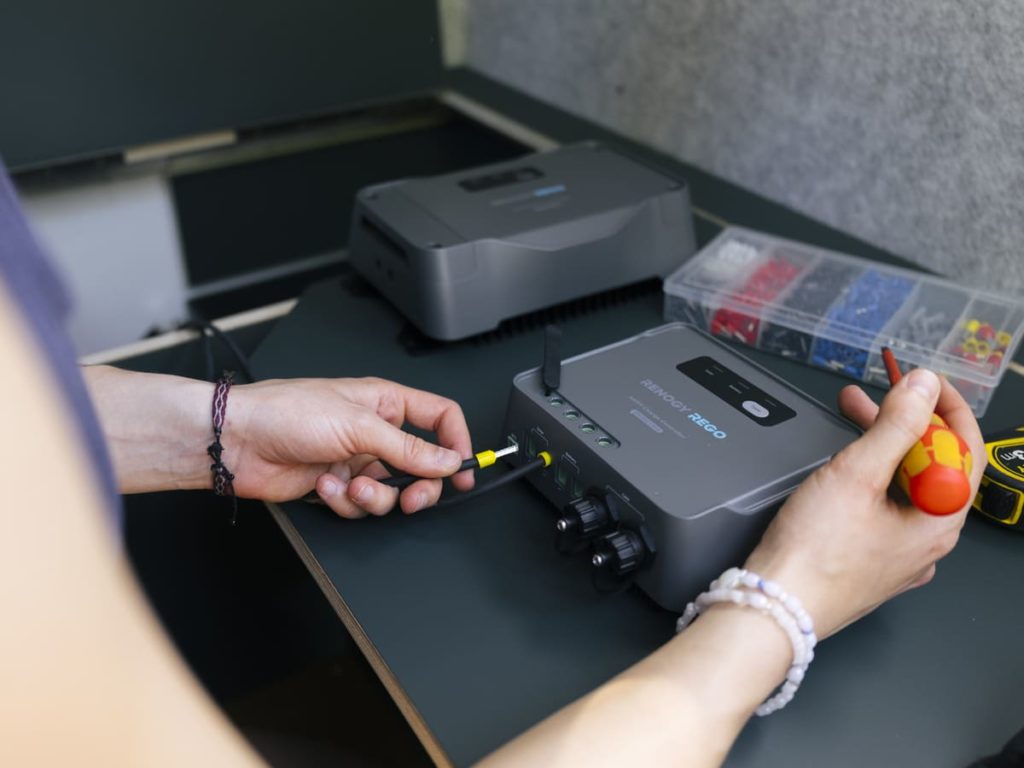
If you have been involved in vehicle conversions for a while, you know the classic setup of onboard electrics: there is a separate device for every task. A DC-DC charger charges the leisure battery while driving, the solar charge controller takes care of the solar panels, the inverter supplies 230 V appliances. Add displays, communication modules and plenty of cabling.
This concept still works reliably today. At the same time, the demands on modern energy systems have changed significantly.
More and more electrical consumers, larger lithium batteries, powerful inverters and solar systems call for systems that are not just powerful – the devices need suitable interfaces and have to be able to network with each other to coordinate their functions. At the same time, they should allow for easy installation and save space and weight.
For these reasons, a clear trend can be observed: modern onboard electrics are becoming increasingly integrated, lighter and smarter.
Fewer Individual Devices – More Well-Thought-Out Overall Systems
Just a few years ago, it was perfectly normal to combine individual devices. Every additional function meant another component.
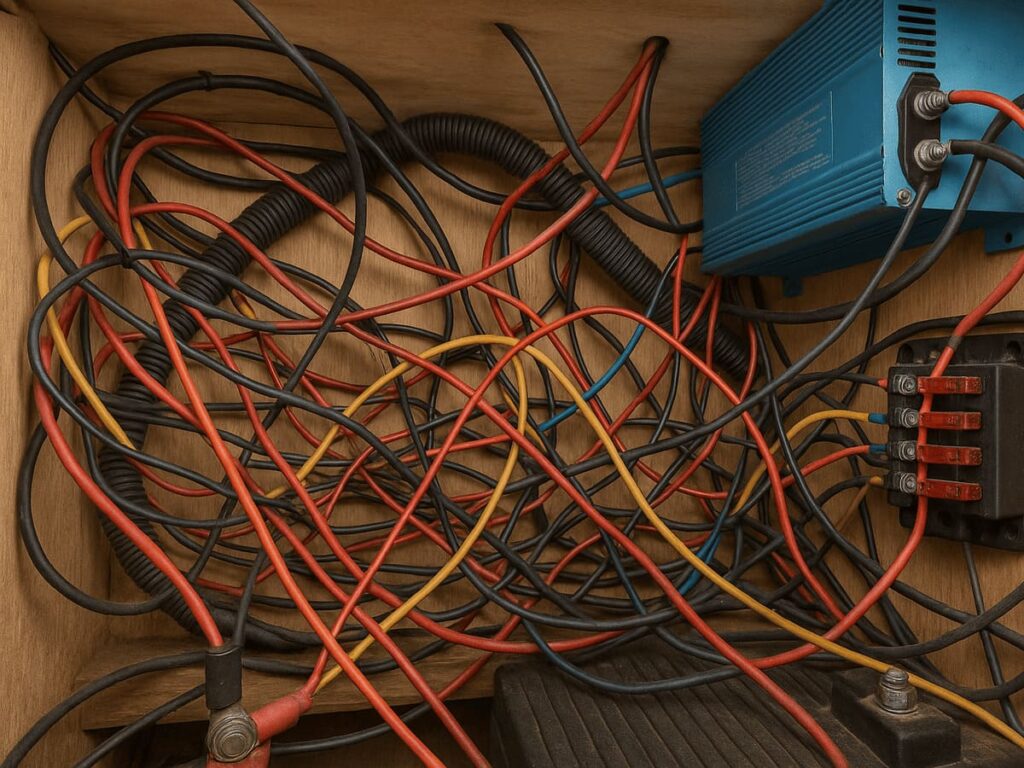
However, that also meant:
- more space required
- more cables
- more fuses
- more installation effort
- more potential sources of failure
Today, many manufacturers take a different approach. Instead of offering as many individual devices as possible, functions are combined in a sensible way.
A good example is combined DC-DC chargers with an integrated MPPT solar charge controller. Where two separate devices used to have to be installed, a single device now takes on both tasks. That not only saves space in the vehicle, but also reduces the amount of wiring and simplifies the whole installation.
A current example is the Renogy DC-DC charger with integrated MPPT controller. It combines both functions in one device, offers up to 60 A of charging power and also enables bidirectional charging between the starter battery and the leisure battery.
In compact campers or camper vans in particular, this kind of integration can make all the difference.
Power Is Important – Power Density Is Becoming Even More Important
For a long time, people looked mainly at the wattage when it came to inverters.
Meanwhile, another figure plays an increasingly important role: how much power is actually packed into how much space?
Modern power electronics now allow significantly more compact devices than a few years ago. That not only saves space, but often also reduces the weight considerably.
In travel vehicles especially, every kilogram saved is welcome. At the same time, smaller devices open up new possibilities for installation planning, because they can be placed much more flexibly.
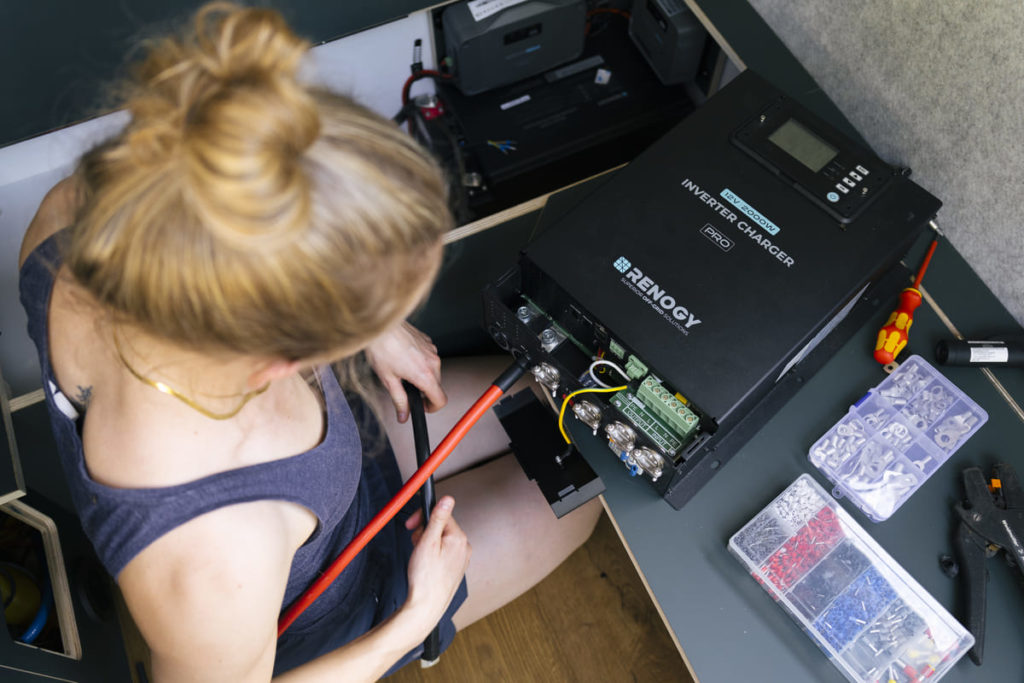
Current device generations show that this development is noticeable. A modern 3000 W inverter/charger from Renogy, for example, weighs only around 7.9 kg, while comparable device concepts can be significantly heavier. Despite its compact design, the full continuous power is available.
So the trend is not only toward more power, but above all toward higher power density.
Integration Also Means Fewer Accessories
Another trend concerns operation.
Many systems are deliberately built in a modular way. Displays, remote controls or communication modules could be added when needed.
This concept offers maximum flexibility, but it also means additional components and installation effort.
Modern devices already integrate many of these functions at the factory. Displays double as remote controls, Bluetooth is built in as standard and communication interfaces are already prepared.
For the user, this means one thing above all: fewer individual parts, less wiring and easier commissioning.
Communication Is Becoming the Deciding Factor
As modern energy systems grow more complex, one topic is gaining more and more importance: communication between the individual components.
Batteries, inverters, DC-DC chargers and solar charge controllers have long stopped working independently of each other. Via interfaces such as CAN bus or RS485, they exchange information and coordinate how they operate.
This makes it possible to charge batteries optimally, monitor system states and detect faults faster.
This networking is becoming more and more important, especially for professional vehicle converters and manufacturers of series-production vehicles. The better the individual components communicate with each other, the easier it is to plan complete energy systems and to service them later.
New Battery Technologies Open Up New Possibilities
The lithium battery market, too, keeps evolving.
While LiFePO₄ batteries are now considered mature, various manufacturers are already working on new cell technologies. So-called solid-state batteries are currently receiving particularly much attention.
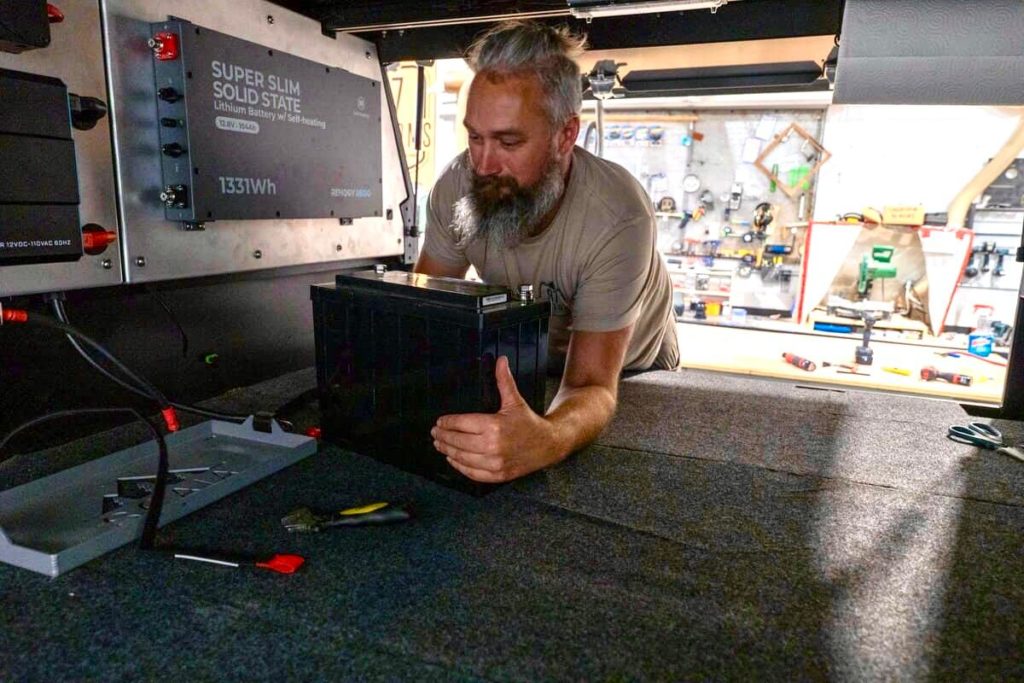
They use only a very small proportion of liquid electrolyte, which allows higher safety, a longer service life and higher cycle stability. At the same time, it makes particularly flat designs possible, which in turn opens up new possibilities for installation.
An exciting development – especially for applications where installation space plays a decisive role. Renogy already offers first solid-state batteries with integrated battery heating, Bluetooth and optional CAN bus communication, which we have available in the tigerexped shop.
Where Is Onboard Electrics Heading?
Looking at current developments, a clear direction is emerging.
Systems are becoming more compact, lighter, more powerful and more tightly integrated. Many functions that used to require several individual devices can now be handled with significantly fewer components.
That does not automatically mean planning gets easier, though.
On the contrary: while individual devices become ever more capable, the importance of the overall system grows at the same time. Inverters, DC-DC chargers, solar charge controllers, batteries, heaters and water systems now work together more and more closely and exchange information via various interfaces. That also raises the requirements for a well-thought-out system architecture.
That is why it is no longer just a question of which components are installed, but above all of how well they work together. A powerful individual device only delivers its full benefit when it is properly integrated into the overall system.
This is exactly where we see one of the most exciting developments of the coming years. The real challenge is increasingly shifting from choosing individual products to planning complete energy systems. The goal is solutions that work reliably, are easy to expand and keep running without problems in everyday use even after many years.
For converters, this means: modern components can simplify installation in many places. At the same time, it is more worthwhile than ever to keep the overall concept in view. After all, a well-planned electrical system does not simply consist of high-quality individual parts – it is a well-thought-out interplay of all components.
And that is exactly where we see our role. For many years we have been supporting the conversion of all kinds of travel vehicles – from individual DIY conversions to series-production vehicles from professional manufacturers. This experience helps us not only to recommend individual products, but to develop complete system solutions in which all components work together sensibly. Because in the end, it is not the data sheet of a single device that determines the quality of onboard electrics, but the interplay of the systems in the vehicle.
Why We Want to Help Shape This Development
For many years, we at tigerexped have been supporting the conversion of all kinds of travel vehicles – from individual DIY conversions to professional series-production vehicles. In doing so, we see very clearly which requirements arise in practice and where existing products can still be improved.
With Renogy, we have found a partner where we can bring this experience into the further development of the devices.
Because our goal is not just to add modern components to our range. We want to help make onboard electrics for travel vehicles even better matched to real installation situations and everyday life on the road in the future.
In our view, the most exciting development of the coming years will not be the next individual product. What will matter is how well manufacturers, converters and users bring their knowledge together to develop energy systems that really work in everyday use. That is exactly where we want to make our contribution.
Discover our solutions for modern onboard electrics or talk to our technical team about your project.
These topics might also interest you:


Share this article with like-minded people: