

For many camper builders, installing hot water in their camper takes a back seat at first – too complicated or too expensive is often the first assessment of this project. In fact it takes quite simple means, if you are installing a pressure water system anyway.
In this article we will look at the options you have for heating water.
But first: do you really need hot water in a camper, or is that overkill when camping? Here are solid reasons to tackle the project “hot water in a travel vehicle”:
5 Good Reasons for Hot Water in a Camper
Hot water can make the difference between a pleasant vacation and an uncomfortable trip that you mainly remember because you washed reluctantly (and as a result perhaps only sketchily) for 3 weeks.
But hot water in a camper is more than just a convenience.
Using warm water instead of cold can offer some significant advantages in terms of hygiene:
1: Better Grease Dissolving
Warm water is more effective at dissolving grease and oil. When washing your hands, warm water can help remove dirt and grease from the skin better, which improves hygiene. This effect should not be underestimated when washing dishes either. With warm water, less dish soap has to be used, which of course makes a big difference to the environmental impact, especially given inadequate wastewater treatment in many travel countries.
2: Fighting Bacteria
Warm water can help kill bacteria more efficiently. When cleaning dishes, cutlery and cooking utensils, hot water can help kill potentially dangerous germs, which promotes food safety.
(Of course you also have to make sure that the rinse water itself cannot contain any disease-causing germs. Here you can find out more about the water filtration that suits you)
3: Comfort When Showering
When showering, pleasantly warm water makes it easier to wash and rinse skin and hair thoroughly. It can also remove sweat, dirt and dead skin cells more effectively, which contributes to better overall personal hygiene.
4: Dental Hygiene
Warm water can be helpful in dental care, as it can help clean toothbrushes better and, depending on the composition, activate toothpaste more effectively.
5: Feel-Good Factor
Besides that, a warm shower after a long day full of activities is the best recovery. You can relax and wash off the traces of the day before you go to bed. That way you are fit for the next day full of adventure and can enjoy your trip to the fullest.

Hot Water Supply in a Camper
There are various ways to set up a hot water supply in a camper and motorhome. An important distinction here is: with or without a storage tank.
Hot Water Boiler
A boiler or water heater with storage tank is the most common way to produce hot water in a camper.
The unit heats water in a tank that also serves as storage. This is usually fitted with insulation to minimize heat loss. The hot water is then available when needed.
Advantage: hot water can be produced when circumstances happen to be favorable (more on that shortly), while the use can take place at a different time.
Depending on the model, boilers can produce hot water in a camper in different ways. There are:
- Gas hot water boilers
- Boilers with an electric heating element
- Boilers with a water / water heat exchanger for integration into the engine cooling circuit
- with an air / water heat exchanger for operation via the hot air from an auxiliary heater
- Boilers that combine two or even more of these options, which offers particular advantages for saving energy and securing the hot water supply. Being able to use several options considerably improves the comfort of use of your system (see also further below).
Instantaneous Water Heater
Instantaneous water heaters heat the water while it flows through a pipe system (on demand) and have no storage tank. They can be run on different energy sources.
Gas Instantaneous Water Heaters
“Instantaneous water heater for camping” is a frequently seen product description when you search for such products. By this camping use, however, what is usually meant is use outdoors. Only very few models are approved for permanent installation, as an open gas flame is used. Without special precautions, this draws oxygen out of the room and fills it with dangerous exhaust gases.
The connection to the gas installation must also undergo a safety inspection at regular intervals in accordance with the regulations currently in force.
Electric Instantaneous Water Heaters
Electric instantaneous water heaters are also available on the market. The problem is the high energy demand.
To heat water on the fly you need power. To fill a single wash basin with hot water you already have to use an instantaneous water heater of about 3.5 kW(!). To keep this device running at 24V, you should not even start with a 5000 Multi.
A hot shower with an electric instantaneous water heater in a motorhome is therefore not impossible, but completely over the top in terms of effort and cost relative to the benefit, especially considering the alternatives. To compare once more: normal instantaneous water heaters in a house average 22 kW.
Compared with heating water electrically in a boiler, the boiler has the advantage that the water is heated over time with low power. Afterwards only the amount of hot water that fits into the boiler tank is available, and not immediately, but that is normally perfectly sufficient – after all, with limited water supplies in a camper you cannot leave the tap running endlessly anyway and do well to ration your consumption. And with high-quality insulation of the boiler body, the hot water is in principle still available at any time despite the delay from the longer heating, because once heated it stays at a high temperature for hours.
Engine Heat Exchanger
Another way to get hot water in a camper is to use a coolant heat exchanger. This uses the heat of the engine coolant to heat service water for use in the living area.
Drawback: hot water is only available when the engine is running, or for a more or less short time afterwards (depending on how well the hot water tank is insulated to slow down the heat loss).
The good news: this actually elegant method, which needs no additional energy source and produces hot water “on the side”, is also integrated in the combiBOIL hot water boiler and can therefore be used by you as an option.
Tips for Using Hot Water Efficiently in a Camper
There are a few tips for making the best use of the hot water system on the road. In a camper, and even in the largest expedition vehicle, no energy source is available in “infinite” amounts, so the efficient use of all resources is especially important.
1. Water-Saving Aerators
Be economical with hot water, and with water in general. Use special aerators and a water-saving shower head to reduce water consumption. That conserves your overall water supply, which increases your autonomy, and of course the hot water in the boiler also lasts longer.
2. Timing
Plan your use of hot water to save energy. As we saw above, you can save the energy needed to heat the boiler specially if you make clever use of the heating method.
With integration into the engine cooling circuit, for example, do not wait until the water, which was heated anyway after the drive, has cooled down again, only to have to reheat it with power from your batteries. Adjusting your shower times can make a big difference here.
3. Insulation
Use a boiler with high-quality insulation so that it keeps the water warm for a long time and does not have to reheat as quickly.
4. Combining Different Heating Options
If you have the option of heating water in different ways, you can always use the form of energy that is currently available in sufficient quantity. If you go about it cleverly, hot water is often simply a kind of “waste product”.
With the combiBOIL hot water boiler, for example, there are three ways to produce hot water. Depending on the situation, you can heat the water in the boiler either with warm air from the auxiliary heater, electrically or via an engine heat exchanger.
Both with integration into the engine cooling circuit and when running the boiler via the air auxiliary heater, the hot water is practically a by-product obtained with almost no additional energy expenditure.
If you have not just arrived at a destination, and therefore produced hot water while driving, and it is also too warm to run the auxiliary heater, then it is probably sunny, and you have enough power in the batteries from solar to heat the boiler once.
So make sure your hot water production is as flexible as possible, so that you do not depend on a single energy source. That gives you the most reliable and comfortable way to a hot shower.
By the way: with such versatile solutions as integrating a second water loop, you can even set up underfloor heating or a towel radiator to dry wet clothes more easily. A little bit of “luxury like at home” so you can feel really comfortable on your travels.
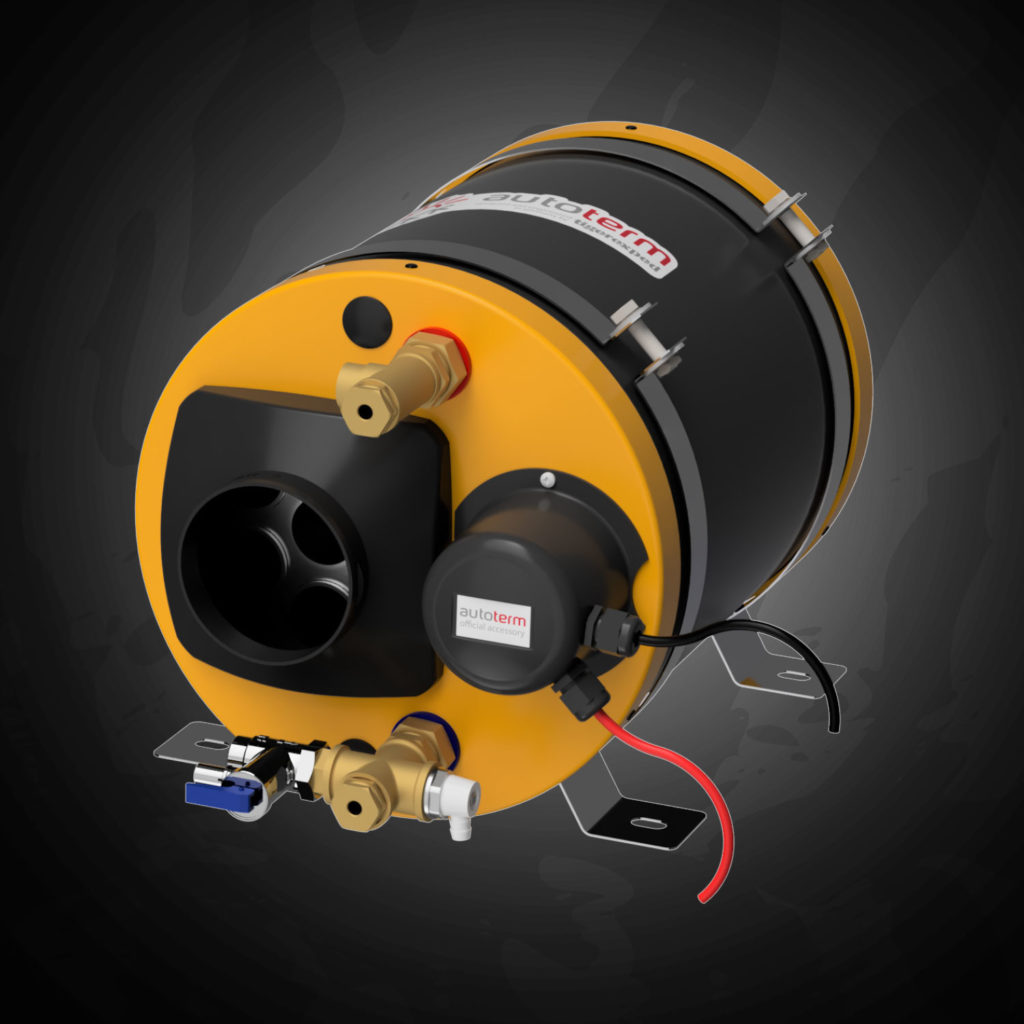
combiBOIL hot water boiler – versatile thanks to three ways of heating water:
- simply via the auxiliary heater
- electrically
- via integration into the engine cooling circuit (or the option of a second water loop, e.g. for underfloor heating or a towel radiator)
Plus: Full Autoterm integration: the auxiliary heater can react automatically to the temperature in the boiler. Shared control panel, overheating and frost protection programmable!
Conclusion
Hot water in a camper is a decisive comfort factor that makes your trips more pleasant. Choosing the right system and using it efficiently are important aspects, however, to make sure you always have warm water available during your adventures.
The installation is not as complicated as you might think. Find out more here about setting up a pressure water system and the Hot Shower Kit 2.0, which makes installation with the versatile combiBOIL hot water boiler especially easy.
Did this article help you? Then share it with friends and like-minded people who will also appreciate this information.
These posts might also interest you:


