

It is loud and the exhaust of heavy ship engines hangs in the air. We are standing in the port of Veracruz in Mexico, picking up our Sprinter. Someone wants to know what we are doing here, and a deeply worried look settles on the face of the person facing us.
“You two women. Alone. In this vehicle, across this country…”
The Mexican we are talking to is obviously of the opinion that we should have come up with something else to have fun. That cannot spoil our mood, though – we are looking forward to the country and its people.

Anna and Anne report here.
With their Sprinter “Berta” they have been traveling criss-cross through Mexico for 4 months and are just setting off to discover the USA. We want to know from them how they experienced Mexico and how the Sprinter holds up on this trip.
SPRINTER INSTEAD OF EXPEDITION VEHICLE
“The exciting thing is actually that we managed all of this with a normal Sprinter.”
Precisely because they were unsure beforehand, Anna and Anne are now totally thrilled, and although we are phoning for this conversation without video, we can practically see the joy in their faces. This is not an expedition vehicle or a Land Rover, but a completely normal car without 4×4, Anne explains. An essential component, however, is the all-terrain tires, without which they would certainly not have managed many routes. “…because when you drive into the jungle, it is often simply wet, muddy and slippery.”
When the two bought their Berta, the Sprinter had already been converted for camping. Before the long-distance trip, however, apart from the tires they made various modifications, whose benefits are now becoming apparent.

WATER FILTERS ARE PURE LUXURY
“Nobody here can drink water from the tap – not only we Europeans, spoiled with drinking water, but the local population cannot either.“
Anne and Anna tell us about shops where you can buy purified water and have canisters cleaned or buy them – so-called Agua Purificadas. And of course there is also drinking water to buy in plastic bottles, but all of this is cumbersome, costs time and money, and the latter option also creates a huge mountain of waste.
“We installed the water filters so that we simply fill every water first with the hose into our water tank. The filter sits under the faucet and cleans the water as it is drawn from the tank. It passes through an activated carbon cartridge to absorb dissolved substances and a hollow fiber membrane that retains bacteria and other pathogens, such as salmonella and legionella. With this method we have never had the slightest problem with the water, even though it is also stored in the tank for days in scorching heat.”
The water supply is 100 liters in the Sprinter, which they would like to expand in later upgrades. To save water, Anna and Anne have, among other things, swapped the cassette for a composting toilet.
The Mexican heat already mentioned led to another modification “on the road”.
FRIDGE VS. MEXICO
Even before the trip, the Sprinter’s lead-acid leisure battery had to give way to a 200Ah LiFePo, because the installed compressor fridge is somewhat older and eats a lot of power, the two tell us.
That was enough for Greece and Sweden, but the unusually strong heat of Mexico keeps the compressor running continuously. The power supply was no longer sufficient for these increased demands. After a short time in the country, a Shadow Parker Kit therefore set off from the tiger headquarters to follow them to Mexico. With a 180Wp solar bag, charge controller and extension cable so they can park in the more pleasant shade while the foldable panel works in the sun, the fridge has kept the food reliably fresh ever since.
Besides enough power, the big tiger solar bag even delivered a real moment of success for the two.
“The great thing was that we could install the setup on the road. Although we do everything else ourselves without problems, we have always left electrical work to professionals so far, because a lot can go wrong if you do not know what you are doing. But connecting the solar bag was really easy and possible with our normal on-board tools – that was a real Yeah moment.”

TRAVEL BROADENS THE MIND
Anna and Anne have by now not only learned to carry out simple electrical installations themselves. With their “offline Google”, Berta’s repair manual, they are gradually learning to work on the vehicle. They do maintenance work and learn to assess suspicious noises.
“If something were wrong with the vehicle here, it would probably take less than three minutes until the first helpful Mexican shows up – but knowing that we can do it ourselves too feels good”
The two therefore familiarized themselves with basic skills even before the trip. For example, they practiced handling the heavy AT tires in case of a breakdown.
You could also call it a language trip, the two say of their drive through most of the country. If you do not speak Spanish yet, you will learn the important phrases on the way very quickly, because in the non-touristy backcountry nobody speaks even a word of English.
Anna and Anne therefore recommend taking a basic Spanish course beforehand and cramming a few words – “…that also opens people’s hearts right away if you can at least greet them with the expression appropriate for the time of day.”

THROUGH THE MEXICAN BACKCOUNTRY
And what about the worries people had for them at the port? All unfounded? “Mexico is an incredibly beautiful and also safe travel country if you stick to certain rules“, the two agree.
Two of the most important of these rules are probably: Do not drive at night and avoid Highway 199. At night, cows and other animals lying down to sleep on the warm road, as well as numerous potholes and “topes” – brutal, for us unfamiliar speed bumps that are hardly visible in the dark – are the most common dangers.
Anna and Anne tell us how consistently friendly and welcoming the people of Mexico are toward the two women in the van. Everyone waves at them, compliments the vehicle, likes to talk to the visitors from Germany and gives tips. In their conversations, however, they also keep coming back to rule three: Do not just park by the side of the road somewhere to sleep, that is very dangerous here.
The two have by now driven through the country from the east coast to the west coast and left it from the Baja California peninsula northward into the USA. Especially inland, people have very little contact with camping and do not really know this way of traveling. Campgrounds are few and far between here, so Anna and Anne regularly ask farmers for a place to stay overnight on their land.
While we are on the phone with the two, visitors spontaneously arrive at the Sprinter. Mexicans who happen to pass by are thrilled with the vehicle and start a lively conversation with lots of laughter and good cheer. “Yes, that’s how it is here”, the two say.

WHAT’S NEXT
For Anna, Anne and Berta, the journey now continues through the USA and on to Canada. They write up their experiences, as well as many tips from trip preparation to country know-how, on their blog perspektivan.de. Be sure to take a look there if you are planning such a trip, and follow great impressions of their journey on Instagram at @perspektivan too.
Did you like the travel report about Anna and Anne’s tour through Mexico? Show it to your travel-loving friends too!
Recommendations from Anna and Anne’s travel experience:
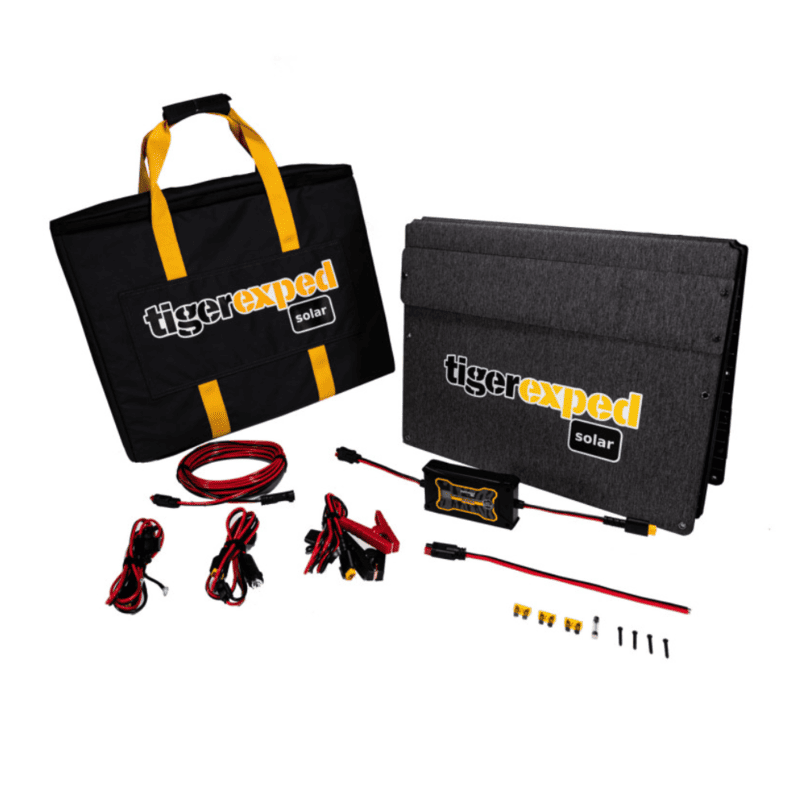
Solar Bag with MPPT Charge Controller, Carry Bag and Accessories
Everything you need in a worry-free package.


You might also like these articles:


