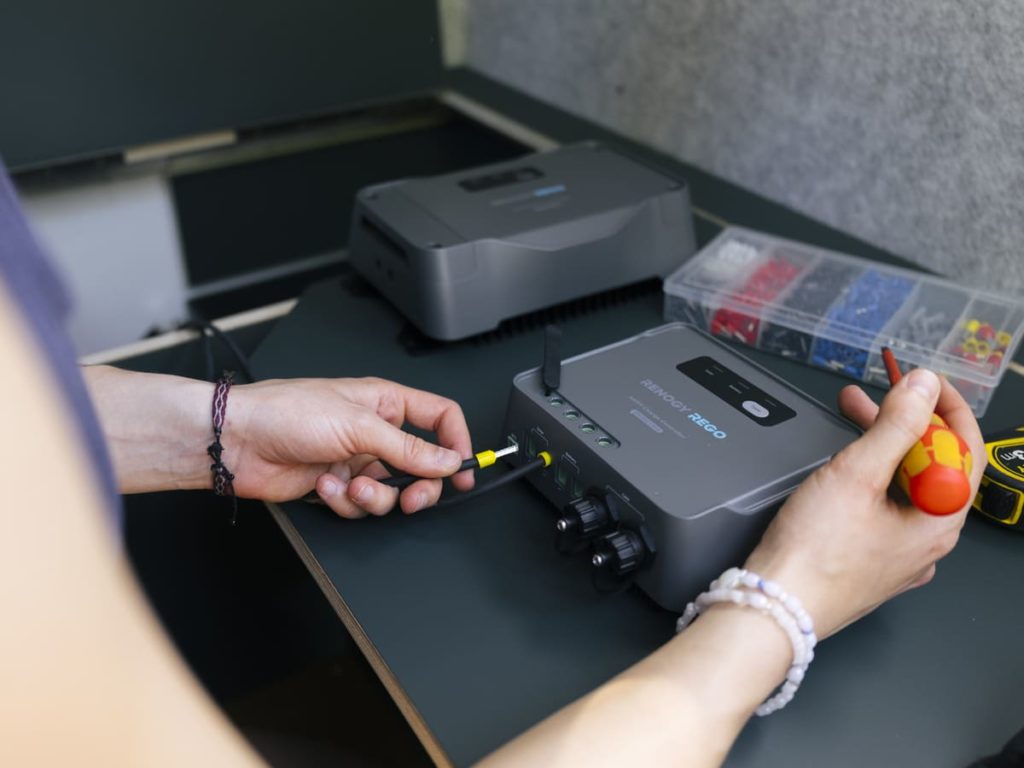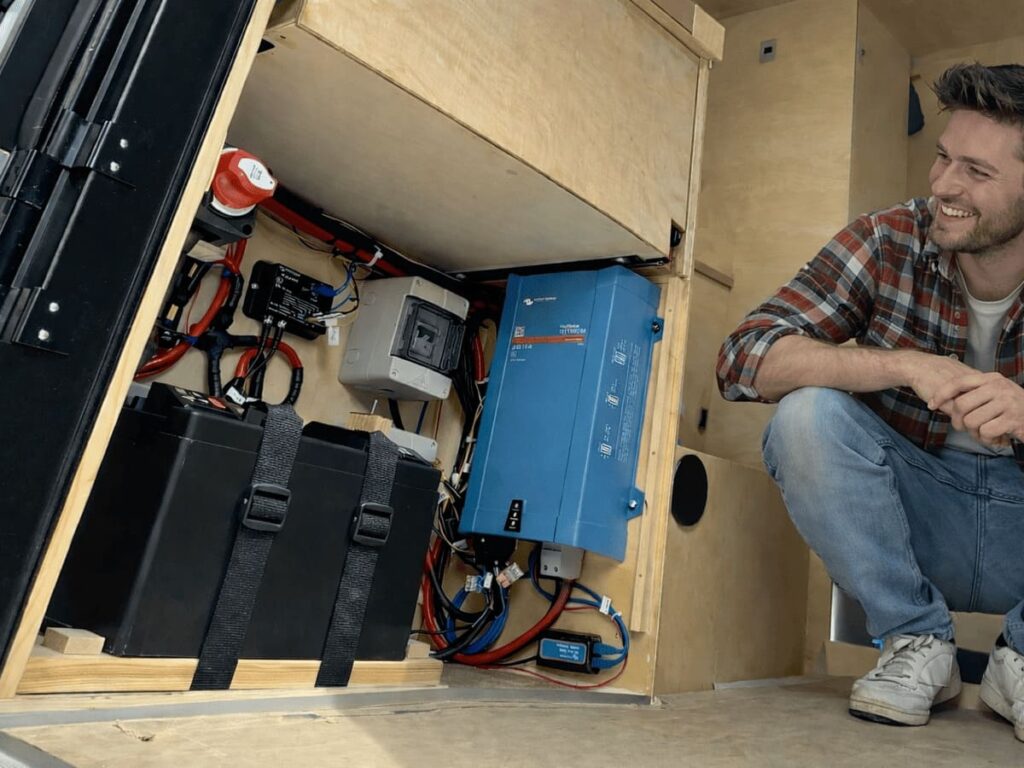
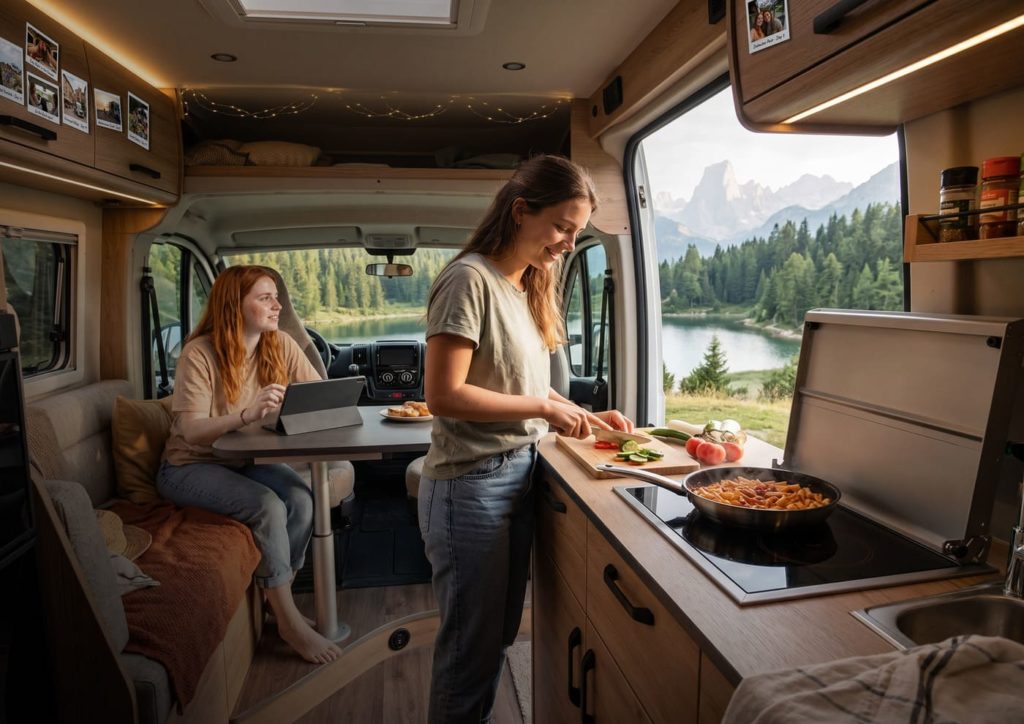
AI visualization: Belief diesel cooker in a van for self-sufficient cooking on the road
You may have noticed that we use AI-generated or AI-assisted images in some places. We want to be open about it and explain why we decided to do so – and above all, what these images are meant to show at tigerexped and what they are not.
We Want to Show You What a Product Can Look Like in Practice
A product on a white background is important. You can make out details, see connections and get a first impression.
But often such a picture does not answer the really interesting questions:
What will it look like once installed? What can I expect from it in use, and what does it make possible for me?
A product photo on a white background does not convey how a product looks in a finished vehicle or what a particular application on the road can look like. This is exactly where AI-generated visualizations can help us.
They allow us to show a real product in a realistic context of use, even if this exact situation was never photographed.
Why Don’t We Simply Photograph Everything?
The short answer: because on this scale it is simply not possible.
Our range keeps evolving. New products are added, existing products are developed further, and many items also have numerous different applications.
To photograph all these situations in the traditional way, for individual products we would have to organize vehicles, prepare installations, look for suitable locations, find photographers and, where necessary, models, transport vehicles and equipment, and then carry out the entire production and post-processing.
And then we might have a great photo of one application.
For the next application, the whole thing would start all over again.
For some important projects this effort is worthwhile, and we will continue to produce real product, installation, travel and application photos.
Doing this for every new product and every conceivable application, however, would be an economic disaster. Costs like these have to land somewhere, and they are usually built into the price of the products.
We do not consider that the right way at this scale, which is why in the past, without AI – our regular customers will know – we worked with less visual material to illustrate possible applications. Being able to give our customers a better idea of our products and of what they make possible on tour with the help of AI, without costs exploding, is something we find useful and to the benefit of both sides.
At Our Company, AI Does Not Replace the Knowledge Behind the Image
One point is especially important to us.
An image does not become authentic just because someone presses a button and an AI generates something pretty.
What matters to us is who decides what is shown.
Behind our visualizations are people who have been working with travel, vehicles, conversions and technology for many years. Our department responsible for creating the images has many years of travel experience and technical understanding.
That has a major influence on which images we create.
How is a vehicle used, and where? Is the product integrated correctly from a technical point of view? Which proportions are right?
AI can generate images.
But it does not have to answer these questions for us.
We do that.
So Authentic Does Not Have to Mean: “This Photo Was Taken Exactly Like This”
When we talk about authentic visualizations, we do not mean that every scene shown actually took place exactly like that.
An AI-generated travel scene is not a documentary photograph of a trip we took. At the same time, however, a real photo is not automatically the more authentic depiction of what we want to show you today.
For example, we often like to use travel photos from our employees. However, quite some time can pass between buying the equipment that was installed in the camper back then, the next trip, and a photo that happens to come out of it and is also suitable for our shop. By now the product may long since have been developed further or replaced by a new generation. Suddenly the “real” photo shows an installation that no longer matches the current state – and can ultimately be more misleading than a carefully created visualization.
Adjusting the created image accordingly is comparatively easy. Rebuilding the camper and making the trip again for a new, great travel photo is – let’s say – rather difficult.
So what matters to us is that what we convey with the image is authentic.
We do not want to feign unrealistic properties, make products look better than they are, invent functions or give you the impression of an application that has nothing to do with the result you can realistically expect.
A visualization is meant to help you better imagine real use.
No more – but no less either.
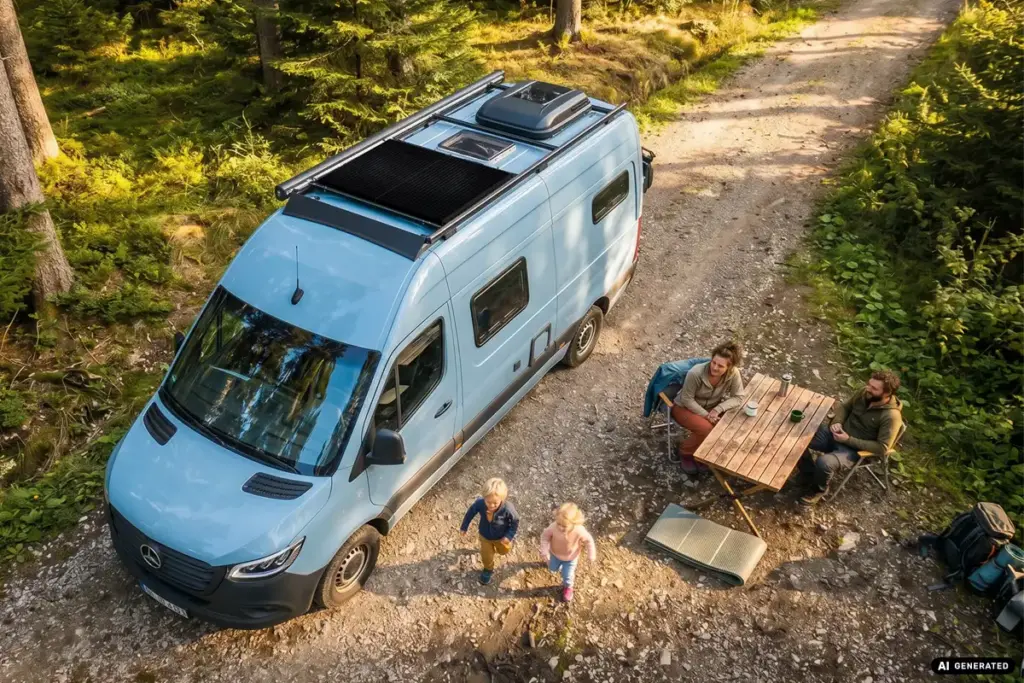
Where AI Is Off Limits for Us
When it comes to technical details, we draw a clear line.
An AI-generated image is not technical documentation.
Dimensions, technical properties, connections, scope of delivery, compatibility and other relevant product features therefore always come from our product information, technical data, drawings and real product images and never from an AI-generated image.
When it matters what a product actually looks like, how it is built or how it is connected, you will always get real product images from us, or perhaps a technical rendering. Along with that come technical drawings and the corresponding product information.
Our Standard: Transparency
We do not believe that the sensible question is whether artificial intelligence is fundamentally “good” or “bad”.
What matters to us is how we use it.
We want to use AI where it helps us make things clearer, more illustrative and more accessible. At the same time, we want to stay transparent when an image is not a classic photograph of a situation that actually took place.
Because our goal is not to deceive you with images.
Quite the opposite:
We want to be able to show you more with images.
How a product can be used. What an application could look like. What possibilities lie in it. And sometimes perhaps also simply convey a bit of the feeling of why we all put in all this effort with vehicles, technology and travel in the first place.
If AI helps us make an idea visible that we could not photograph with reasonable effort, we are happy to use that possibility.
But the idea, the experience and the responsibility behind it always and without exception come from us.
These articles might also interest you: