

Offroad drivers and overlanders in particular have the problem of having to carry fuel for a longer track or off-road stretch. Consumption rises when driving on unpaved ground, and depending on the country, the distances between gas stations can be huge.
In climatically hot regions, however, the unavoidable vapors make it almost imperative to mount fuel cans on the outside, especially if you also want to sleep in the vehicle.
Sturdy offroad jerry cans for external mounting are just right for such uses. There are, however, a few safety notes to observe when using them, which we would like to go into here.

OFFROAD JERRY CANS – WHAT YOU NEED TO KNOW
Carrying fuel can be a danger to yourself through vapors and fire, as well as to the environment, of course! So please always follow the safety instructions for the correct handling of jerry cans.
Even when they are as sturdy as our jerry cans from Overland Fuel, they cannot prevent these dangers on their own if they are handled incorrectly.
Warning: Fire Hazard
Cans that are or were filled with fuel pose a fire hazard, so keep them away from sources of ignition at all costs.
These include, for example, campfire sparks when a vehicle with externally mounted cans is parked nearby.
Smoking while using fuel cans can also potentially trigger an explosion, and remember stoves, heaters, electric motors and other sources of ignition.
Storage During Use / Mounting
Cans filled with fuel should not be stored inside the vehicle or living space, but always in a well-ventilated place. Escaping vapors are harmful to your health!
Also keep in mind that the temperature inside a vehicle can rise very sharply on hot days, causing cans without a vent valve to bulge. This can lead to deformation, and as a result to escaping vapors and leaks that can stubbornly soil the interior of your vehicle.

That is why you should always mount the cans with the cap facing up, even when mounting them on the outside. A leak is very unlikely if the cans are handled correctly. Still, any release of liquids that are hazardous to the environment and health should be prevented by every means.
Equalizing the Pressure
Avoid the can bulging and contracting again and again with heat and cold. So make sure the pressure is equalized. When stored upright, this can be done by tightening the cap only lightly. So don’t screw it shut with all your strength, but only so far that gas exchange can still take place.
Depending on temperature fluctuations, you can also open the can briefly from time to time and then close it tightly again. This measure prevents cracks in the material or deformation.
Additional tip: don’t fill the can to the brim, but leave some air.
Storage When Not in Use
For the reasons just mentioned, a fuel can that is not currently in use should be stored in a cool, preferably dark place. There you can also keep the can tightly closed. Still, stand it upright and make sure children cannot get to it.
Additional Notes
Make sure the seal in the cap is present and undamaged.
And one more important thing that applies to the use of any jerry can and to handling diesel or gasoline in general: please never siphon fuel by mouth for decanting.
Operating Temperature
What Does “Very Hot” Mean for a Can
That naturally depends on the material used. The normal operating temperature should not exceed 60°C (e.g. in very hot vehicle interiors and when stored / parked in the blazing sun).
Black cans should only be used for transporting and storing fuel under suitable climatic conditions. When used with water, too, the influence of extreme sun and heat or temperature fluctuations should not be underestimated, especially with black cans (keyword pressure); with all other colors the problem is merely smaller, but it doesn’t go away!
Use as a Water Can
If you want to use a can to store drinking water, look for appropriate certification so that no harmful substances such as plasticizers migrate into your water.
From our range, the drinking water can from Overland Fuel is intended for this task.
In general, the cans for utility water from Overland Fuel are also made from a plastic that meets the EU Commission requirements for plastics “intended to come into contact with food”. The silicone seal and ABS screw cap are, however, excluded from this assessment.
Before Using It as a (Utility) Water Can
If you want to use a can to transport water, it is advisable to air out a brand-new can straight from production first. For that, stand it in a cool, dry place with the cap open for at least two days and then rinse it out once with water.
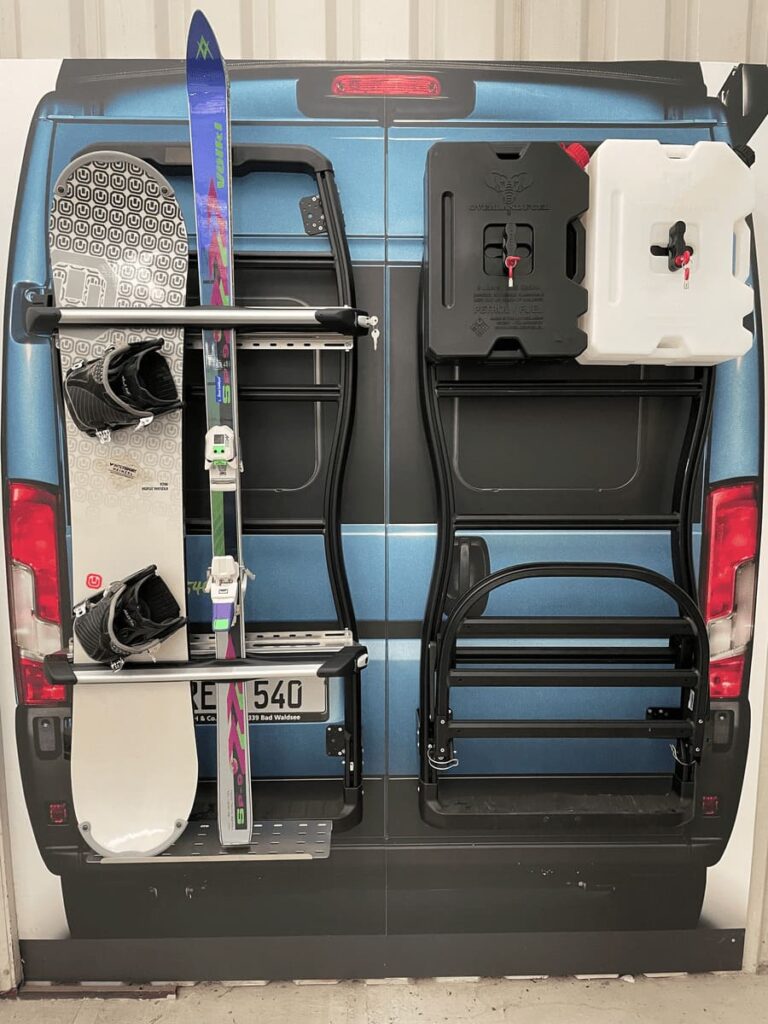
Observe Local Rules on Colors and Other Markings
Please note that a certain can color may be required for transporting hazardous liquids. These are non-uniform (local) rules, so it is best to find out about the region where you live or where you are traveling.
The same goes for the labeling of cans. The manufacturer’s embossing follows no international or local standards and can vary.
Protection from Damage
Make sure your can does not get deep cuts or other damage. So you shouldn’t use it as a cutting board or as a branch deflector. Such damage is detrimental to stability, but that probably goes without saying.
Other misuse or treatment not intended by design can also damage materials and thus reduce functionality and quality. For example, paints or coatings can interact with the material and affect its durability.

Our recommendation:
Fuel and water cans from Overland Fuel
- Ultra sturdy
- with excellent-quality aluminum mounting hardware, also lockable
- perfect for external mounting
Did these tips help you?
Tell your friends about it too and share this article with just one click!


