Finding a campsite where all you hear at night is a nearby river rushing by. One that maybe not 100 other campers can reach, because the way there leads through mud or loose sand and is a bit tougher going. What a great feeling. A little adventure, a break from everyday life …
To make sure this adventure doesn’t last longer than planned, recovery boards should be part of your kit as traction aids.
But owning them is one thing. Using recovery gear correctly is another. Here you get valuable tips for getting started, so that a bit of offroad fun doesn’t turn into recovery frustration.
From Airborne Steel Plate to Recovery Board
So-called sand ladders are indispensable for offroading today. When traction is missing, they are the first choice. And not without reason: they are also what really makes a vehicle look like an offroader.
Their original development served less fun purposes. Around 1940, steel plates were developed for military use so that aircraft could land on sandy or boggy ground. You still hear the term “airborne landing plates” (Luftlandebleche) today. It refers to long steel plates with holes and stabilizing ribs. They also have hooks on the sides so they can be quickly linked together, making whole fields passable even for heavy vehicles.
Metal sand ladders like these are made today without side hooks for vehicle recovery, often from lighter aluminum.
Modern recovery boards for offroaders up to the light commercial vehicle class are now made from high-strength plastic, nylon or similar. They have become robust lightweights. The TRED Pro, for example, withstands loads of up to 4.5 tons at a weight of only 4.1 kg.
Getting Out of the Dirt with Recovery Boards
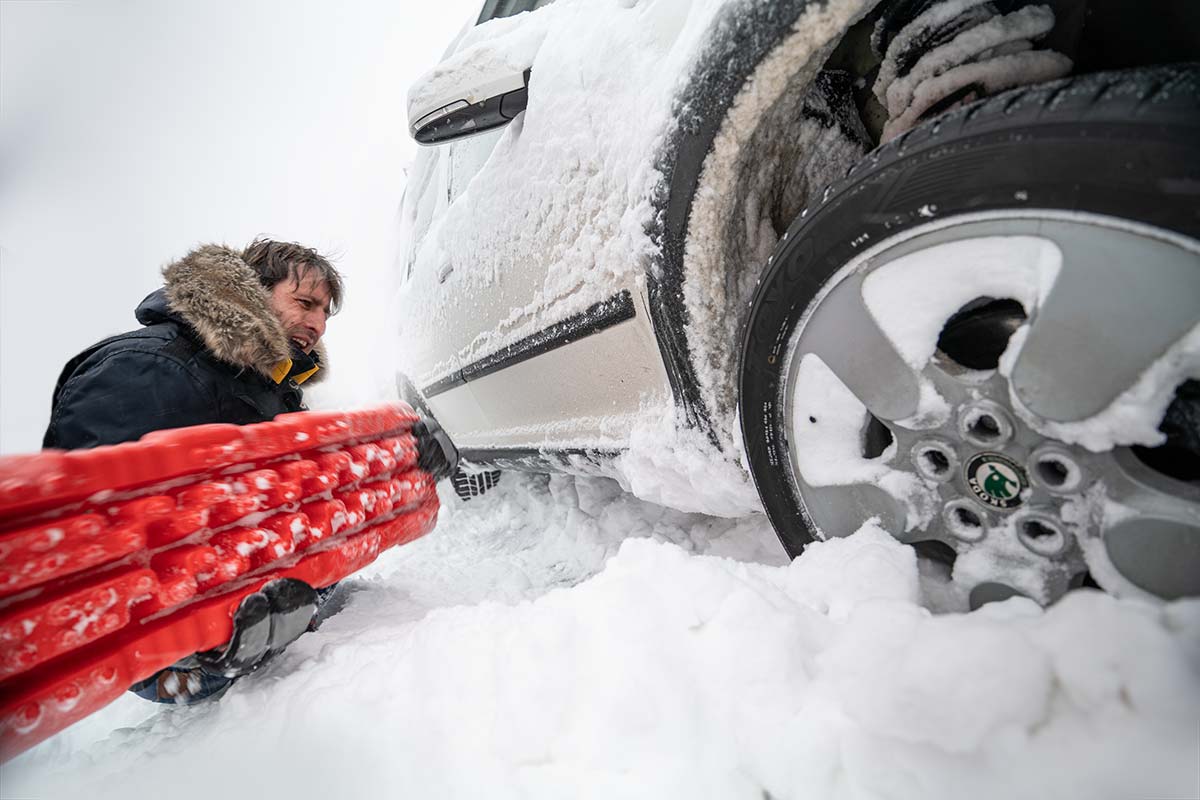
If you are stuck on sandy or muddy ground or in snow, your recovery boards as traction aids and the following tips for using them correctly will help you.
1. Don’t Make It Worse
If your tires have lost traction and your vehicle is digging itself in: don’t try to get free by revving for long. That only makes things worse. The tires will shovel away even more loose ground, and your camper sits deeper and deeper in the mud.
2. Get to Work
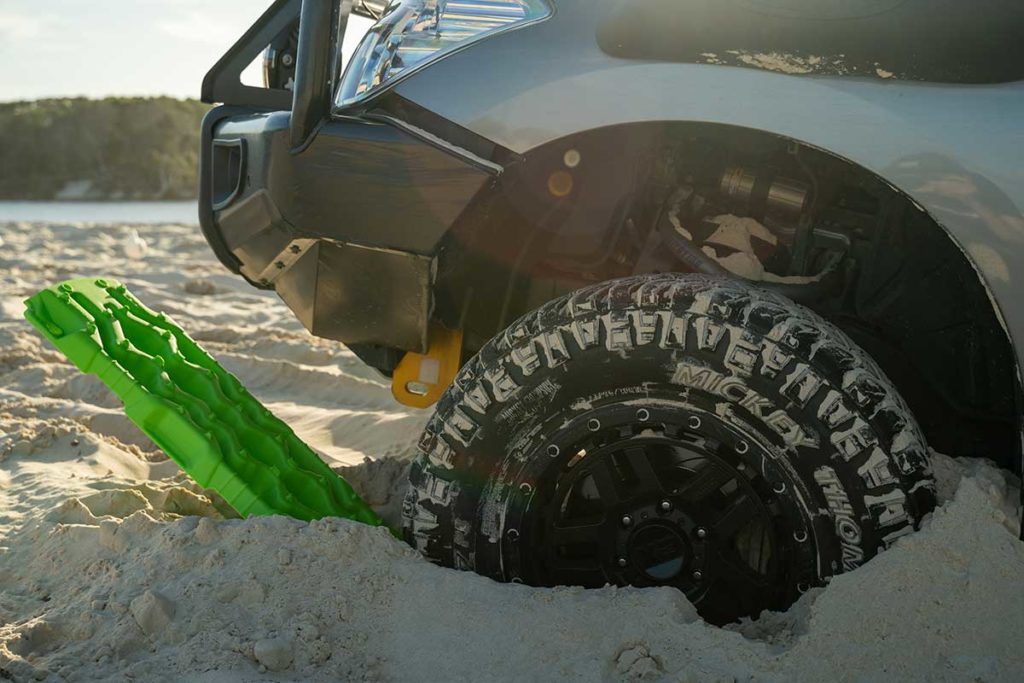
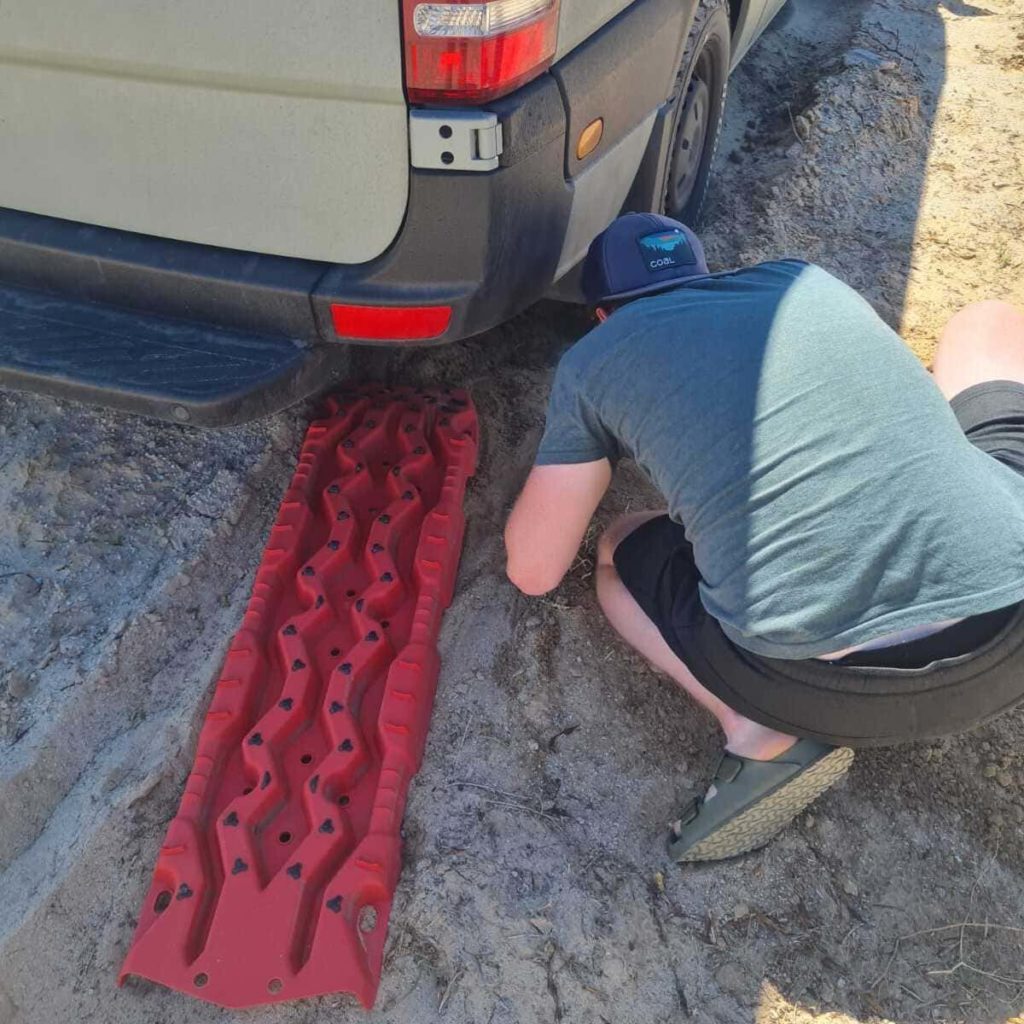
Shovel away as much loose ground as possible in the direction of travel in front of your tires. Depending on the situation, the way out of the hole may lead forward or possibly better backward. If the terrain beyond stays very soft, you can dig a short track ahead, so that you don’t get stuck again right after driving over the sand ladder.
Good recovery boards, like TRED’s, are shaped so that you can use them as a shovel.
Not being lazy here is half the battle. If the tires are deep in the mud, getting out is easier if you also clear the sides reasonably well. If axles, differentials or other parts are resting on the ground, the tip applies twice over: when you try to get the vehicle free, they not only push sand or mud ahead of them, which makes everything much harder, but the recovery boards also need the weight of the vehicle on the tires to give them enough traction.
3. Wedge the Recovery Boards In
One of the decisive points is to wedge the recovery board deep enough between tire and ground. Just throwing it in front doesn’t help, not even with the nice hollow that TRED’s have specifically to hug the tire better. Flex your muscles and create a “point of attack” for the wheels.
Which wheels to place them at:
If you are out with a pair (two) of recovery boards in a vehicle without locking differentials, depending on the situation it is best to place one traction aid at the spinning wheel of the front axle and one at the rear axle.
If your vehicle is equipped with an axle lock, engage it and use the traction aids on that axle.
If your camper is 2WD only, use the boards at the drive axle.
With a set of four recovery boards you naturally don’t have to worry about this. Giving every tire a board makes the recovery much easier.
4. Prepare the Vehicle
If you don’t have permanent four-wheel drive, make sure it is switched on. Using differential locks is also advisable now.
5. Drive Off
Pull away decisively, but always in a controlled way! When recovering a vehicle with recovery boards, it is extremely important that the tires do NOT spin on the board. That doesn’t help the recovery in any way, but it damages the recovery board and possibly even your tires.
Also important:
Don’t ruin your clutch! Pulling away with a slipping clutch gets you nothing. Especially offroad: use the clutch ONLY when you absolutely have to for shifting, otherwise NEVER. All you do is lose control of your vehicle. And re-engage the clutch without hesitation. Especially in situations like recovery, you can otherwise order a new one right after the track.
If the First Attempt Fails:
1. Shovel More.
Don’t keep trying for long. If pulling away with recovery boards is well prepared and works, it will work right away. If not, 10 attempts won’t help either. Getting out and shoveling more is what’s called for then.
2. Check the Tire Pressure
Lower tire pressure gives the tire a larger contact patch and therefore more traction. As a rule, it helps enormously to lower the tire pressure from the start when driving on loose ground. The likelihood of getting stuck falls along with the tire pressure.
If your first recovery attempt wasn’t successful, you can check whether the pressure can be reduced even further.
IMPORTANT:
You should of course be equipped to raise the tire pressure back to normal after the recovery. Driving at normal speed on paved roads with reduced tire pressure poses a great hazard to you and others! Handling deteriorates enormously, and the tire can even burst from flexing and heating up.
For a vehicle without an onboard air system, that means: a compressor has to come along in this case.
After the Recovery
Don’t forget to collect your boards after the recovery. Optional straps attached to the sand ladders make them easier to find if they have buried themselves in the mud when driven over.
Because of all the dirt, by the way, we recommend mounting them on the outside of the vehicle with suitable mounting plates and bolts, or stowing them in a suitable bag.
Feeling well prepared?
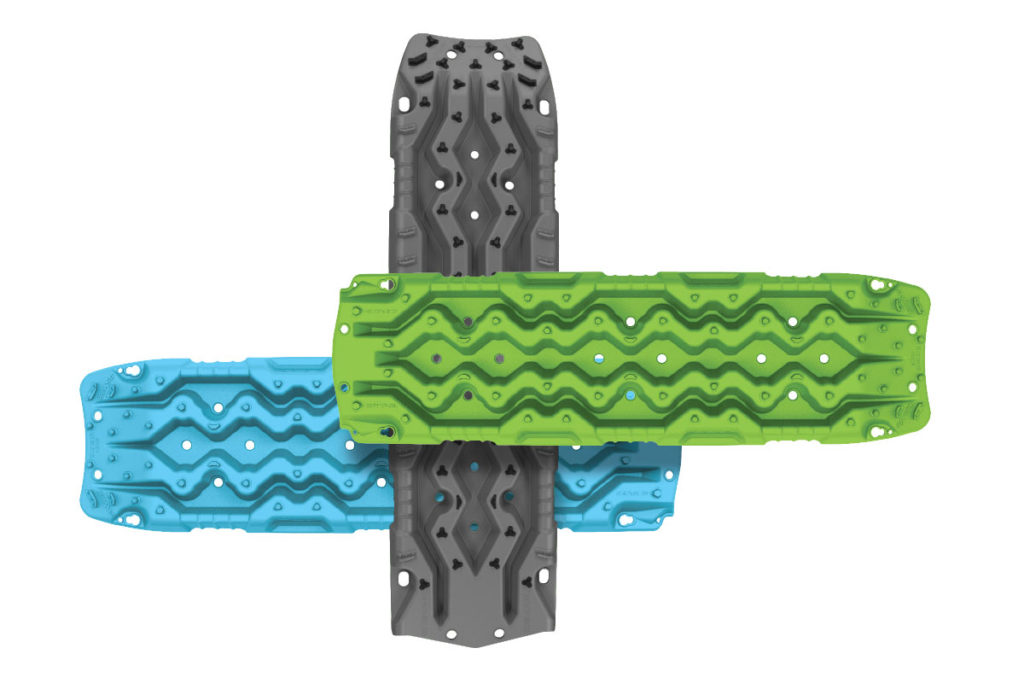
Here you can go straight to TRED 4×4 recovery boards and the matching accessories.
By the way: TRED sand ladders in the HD and GT variants are now also available as affordable Compact models: less storage space and less investment, but with the same top material properties. For everyone who doesn’t push offroad driving but wants to be prepared just in case.
Find these tips helpful? Then feel free to share them with friends and like-minded people:
You might also be interested in these topics: