
Many travelers have been eagerly waiting for the introduction of the altitude kit for Autoterm auxiliary heaters (back then still called Planar heaters). At last, a diesel air heater that also runs reliably in the mountains or on high plateaus.
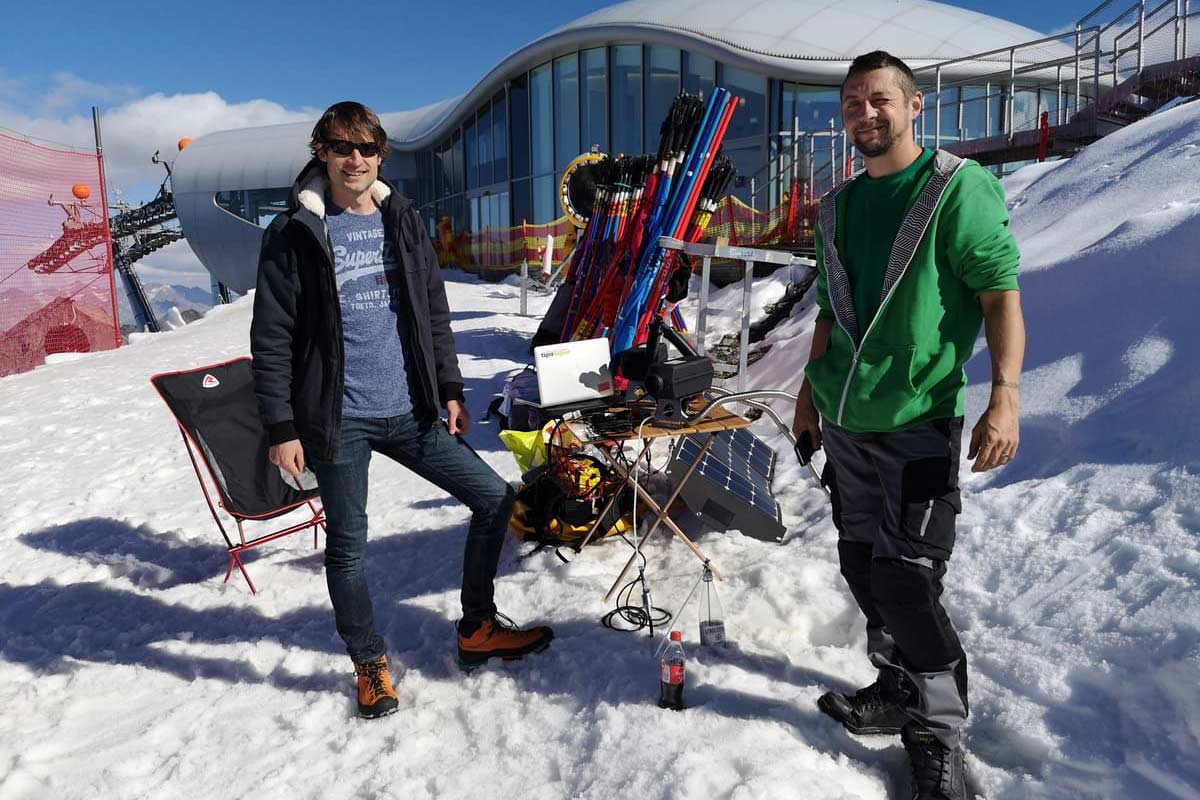
We at tigerexped helped kick off the development of the altitude kit at the manufacturer, actively co-developed it and – last but not least – tested it ourselves. Together with Autoterm, we ran tests and measurements at 3,440 m on the Pitztal Glacier.
Here are our tips and advice on the altitude kit and on running the auxiliary heater at high altitudes.

What Does the Altitude Kit Actually Do
As altitude increases, the altitude kit reduces the injection quantity of diesel. This happens fully automatically and without any action on your part, depending on the ambient air pressure. This prevents sooting of the combustion chamber, or at least drastically reduces it.
Less Oxygen and Less Diesel
In proportion to the amount of oxygen in the air and the reduced diesel injection that goes with it, the maximum output the heater can reach drops accordingly. As a rule of thumb:
From 2,000 m up, you lose about 5% of output per 500 m of altitude.
This does not cause any operating faults. Our own tests ran without problems up to 3,440 m and have since been confirmed by hundreds of happy campers. We have also received messages and videos from customers at altitudes of over 5,000 m, showing the heater running without problems even under these extreme conditions. Check out this video by Karo and Fabian, who put their red T3 Syncro through the ultimate test on the Lagunas Route in Bolivia – at 5,032 m above sea level. Higher than that is really only Tibet.
What You Need to Keep in Mind When Running the Auxiliary Heater With an Altitude Kit
For use at high altitudes, free airflow for the fan is especially important. That means: ideally use no air ducting at all, or only a very simple run (preferably without bends).
Combustion air intake and exhaust should also be routed extremely short and with low resistance (= few kinks, no blockages or reductions).
Burning Free Still Matters With an Altitude Kit
Even with an altitude kit, running the diesel auxiliary heater above 3,000 m is a technical compromise. Over a longer period, you have to make sure the combustion chamber gets properly hot again from time to time so it can be burned free. If that is not possible, soot deposits can occur despite the altitude kit, just like with heaters that only ever run on the lowest setting at low altitude.
So there is no guarantee against sooted combustion chambers. There never was, and there won’t be with the altitude kit either. So please remember: as soon as you return to lower altitudes, set your heater to the highest power level and let it burn free properly (one hour at full load). That way, no problems should appear later on either.
Burning Free, Even at Low Altitude
The principle of burning free also applies if the heater is only used at low altitude but runs almost always on the lowest setting.
As a rule of thumb: every 1-2 weeks, at least half an hour at full load so the combustion chamber reaches full temperature again.
There is normally no further maintenance. For very special cases with weeks of overnight stays at more than 4,000 m, cleaning the combustion chamber and replacing the gasket set after some time can certainly be justified.
If this article helped you – show it to your friends and other like-minded people too!
These tips and infos might also interest you: