Generating your own solar power is more topical than ever. No wonder: with a mini solar system for the wall socket, you can run the appliances in your home on 100% ecologically generated electricity for a manageable purchase cost and even save money in the process.
So is the energy transition possible on your own balcony?
What you need for it, whether you can simply use your solar bag or solar system from your motorhome , and what the legal situation is for registering such small systems: you will learn all of that in this article.
Generate Your Own Solar Power – Save on Energy Costs
Installing a mini solar system (also called a mini PV system, balcony power plant or balcony module) is growing in popularity for good reason. Energy costs keep rising and feel immeasurably high. Self-produced electricity has great savings potential. Once the system is bought, it generates green electricity for many years without further costs or effort.
Another reason for the popularity of small balcony power plants: many people are waiting for the energy transition. Electricity from coal or nuclear power is unfortunately still commonplace. Switching providers can make the power grid as a whole “greener”, but green electricity does not come directly out of your own wall socket. With a PV module on your balcony connected directly to the socket, that is different.
By showing that you simply produce your own green electricity on your balcony, you can also promote general interest in small and larger solar systems. As many owners of balcony solar systems report, their little power plants attract a lot of interest in the neighborhood, and sooner or later quite a few neighbors start producing their own green electricity.
How do the appliances in the house decide which electricity to use?
The electrical appliances plugged into the sockets of an apartment actually always use the electricity from a plugged-in mini solar system first. If that is not enough, the demand is topped up with grid power. The principle behind it is physical and quite simple: put somewhat simply, you can imagine that the grid “pushes” exactly as much electricity into the apartment as the appliances are currently drawing. If electricity from a balcony solar system is already present in the home network, less electricity is “pushed” from the public grid.
The 600 Watt Limit
According to the VDE-AR-N 4105 application rule, mini solar systems for the wall socket may feed a maximum of 600 watts into the power grid.
This is because the power from the grid and the power from the solar system add up and can overload the commonly installed wiring and fuses. So if a very powerful appliance is drawing power from the same circuit into which a high-output solar system is feeding at midday sun, this could under certain circumstances actually lead to a fire.
Technical modifications for more than 600 watts?
In theory, there are fairly simple solutions for safely feeding in more than 600 watts. For example, it would be conceivable to replace the circuit breakers of normally 16A with 10A ones. This limits the current that can be drawn to a level that on the one hand still allows stronger appliances to run without problems, but on the other hand creates more capacity to absorb solar power.
Another option would be the exclusive use of a specific circuit for the electricity from the balcony solar system. The sockets connected to this circuit are very easy to identify by switching off a fuse in the fuse box. All sockets that no longer work are on exactly this circuit and would then have to be either disconnected or sealed off.
BUT: legally, this work may only be done by a professional. Although both options are not demanding from a craftsmanship point of view, only electricians may replace circuit breakers or seal off sockets. That in turn costs money and lengthens the time until the small solar system actually starts saving its first electricity costs. Whether you can find an electrical contractor who will send someone to your apartment for such a tiny job is another story altogether.
See also:
Information sheet from the consumer advice center
The inverter must limit the output of the solar modules to 600 watts when feeding into the socket.
The solar modules may of course have a total output of more than 600 Wp, since they will rarely deliver full power. To be able to feed in the permitted 600 watts in the end and make them usable in your home, the solar modules used should ideally be able to deliver more according to the data sheet.

How much power does a solar module with, say, 300 Wp REALLY deliver?
Our article How Much Solar for Camper and Motorhome – Assessing the Influencing Factors Correctly shows what actual output you can expect and what it depends on, even independent of the motorhome topic, in a few impressive comparison figures.
What can I run with 600 watts?
The average output of a small balcony PV system is mainly suited to covering the so-called base load in a household. This base load mainly comes from appliances in standby mode and is usually 300 – 400 watts in the average household. If all appliances are always carefully switched off completely when not in use, reducing the base load, even the normal consumption of a laptop can be covered by the balcony solar system.
However, the system’s output is not enough to run a toaster (approx. 800 to 1400 watts) or a hair dryer (sometimes over 2000 watts).
What happens if my system produces more electricity than is needed at the moment?
If you are on vacation, for example, and not using any electricity at home, it can well happen that the mini solar system produces more electricity than is consumed. What happens then depends on the type of your electricity meter.
In general, the surplus solar power flows into the public grid. The quantities are small, however, and negligible even for official bodies. When registering your plug-in solar system (see further below), it is enough to state that you do not intend to feed in electricity and that, should a small amount nevertheless find its way into the vastness of the public grid, you waive any feed-in tariff (EEG tariff).
Depending on the meter type, there are 3 possibilities:
1. Meters without a reverse-flow lock
The meter runs backwards when the surplus power exceeds the starting threshold. Most so-called Ferraris meters have no reverse-flow lock. Such (old) meters (recognizable by the rotating disc in the middle) generally have to be replaced when registering a mini solar system. How grid operators handle this can vary, however.
2. Meters with a reverse-flow lock
The meter simply stands still (the reverse-flow lock can be recognized by the symbol of a cogwheel with a blocking mark)
3. Bidirectional meters
These count the electricity drawn and the surplus electricity fed in separately.
Where do I get a new meter / a meter with a reverse-flow lock?
Normally from your energy supplier. If they cause problems (refusing the conversion, insisting on a more expensive bidirectional meter, threatening to disconnect you from the grid), switch to, for example, an electricity provider with a smart meter tariff. When choosing a new provider, you can ask directly how they view the use of mini solar systems.
However, you generally cannot get money for the electricity fed in (EEG tariff) with a mini solar system.
What a Balcony Mini Solar System for the Wall Socket Consists Of
The components needed for a small balcony power plant are manageable. You need
- one or two solar modules (depending on output)
- an inverter
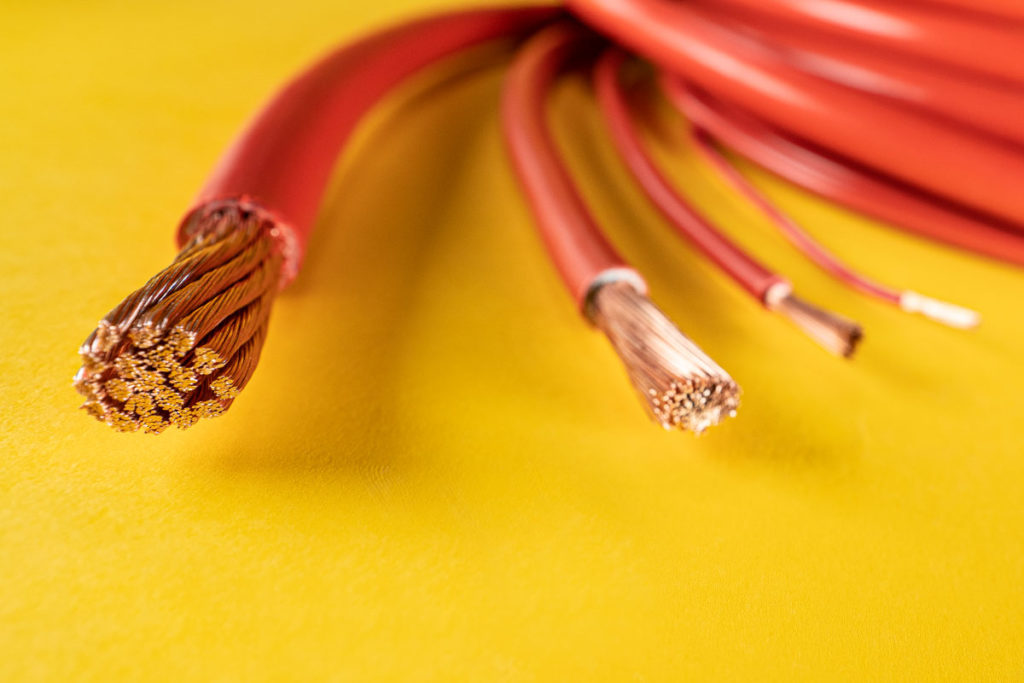
- cable from the inverter to the solar module
- cable from the inverter to the balcony socket
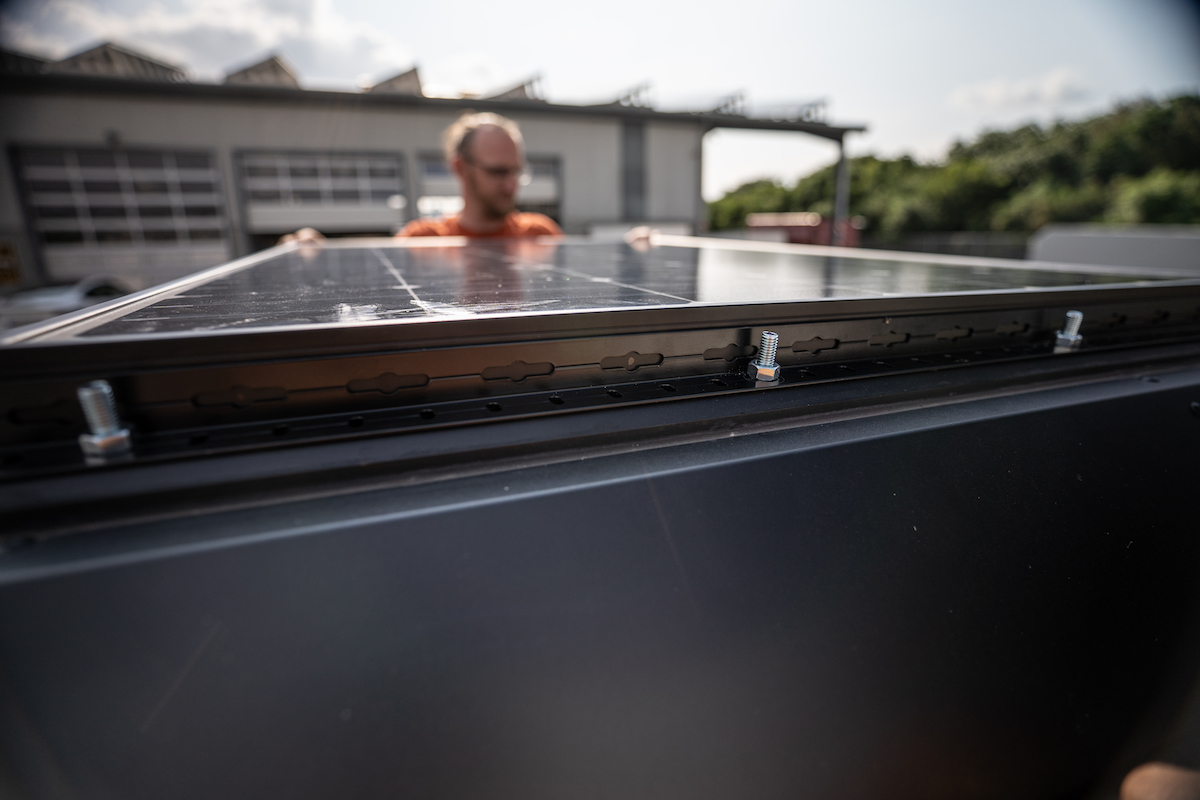
- mounting for the railing or a stand / frame and screws
When does it pay off
The problem with such a calculation is that you do not know when the electricity is consumed, or can only partly control it. Unfortunately, electricity demand is usually highest when the sun is not shining.
The solar system generates the most electricity around midday. The problem is that many people are not at home at that time, so the electricity produced is not used at all. Often only the fridge and the Wi-Fi router run during the day.
That adds up to, for example: fridge 400Wh + Wi-Fi router 120Wh = 520Wh per 24h.
Depending on location and season, however, the solar system manages to generate these approx. 500Wh in only a few hours a day. Let us say we manage that for about 4h.
520Wh divided by 24h = 21.66Wh per hour x4h, which makes 86Wh that we do not have to draw from the grid.
If a kWh costs, say, 0.35€, then we have saved 0.000301€ per day. If we manage to run, for example, the dishwasher and washing machine at the time when the solar system is at maximum output, you might be able to save in the order of 1-3 kWh per day, i.e. 0.3€ – 1€ per day.
The latter variant only works for about 6 months of the year, though; the rest of the time the yield will be significantly worse. In December the yield is so poor that, no matter how much effort you put in, you might save 0.3€ at most.
Solar Bag from the Motorhome as a Solar Power Plant
The solar bag from your motorhome can of course be spread out on the balcony just as well as when camping. Especially with models with direct USB ports, such as our big tiger with 160 Wp, suitable small household devices can be charged by the sun directly and even without a connection to the house.

Solar bag with 2 USB-A ports. Charges small devices that can be charged via USB directly and without the detour via the house socket.
Solar bags without USB ports, such as our big tiger 160 Wp, can, as in a motorhome or camper, also be connected to a 12V battery on the balcony, so that the stored electricity can be used later via an inverter. It should be mentioned that with this solution, strictly speaking, this is not a balcony power plant but a small off-grid system. In addition, make sure that the inverter used can deliver the required power for the respective device and (especially when used with laptops or other more sensitive devices) is of suitable quality (producing a smooth sine wave).
The application is wonderfully practical, since nothing is permanently mounted or needs the landlord’s approval. A detour via the house socket and thus registering a system etc. is also unnecessary. In bad weather, the solar bag can simply be packed up and stowed away compactly.
To feed into the household grid, you naturally need a suitable balcony inverter. The only thing to note is that it works with the corresponding panel voltage, i.e. that the “Voc” value is high enough for the inverter to start.
Attention: classic automotive 230V inverters are unsuitable for this purpose, as they have no ENS protection device.
Solar bag behind window glass?
When using the solar bag behind a window, part of the incoming light is reflected and absorbed by the glazing. How strong the resulting loss of output is also depends on the type of window – triple glazing will affect the solar bag more than an old-building window.
What is certain: solar bags (like ordinary solar modules) can only work to a very limited extent under such conditions and are intended for outdoor use in direct sunlight.
Connect a Motorhome to the Household Circuit?
Using the solar bag from the motorhome on the balcony is a good way to use “solar money” that has already been invested twice. Many motorhome owners, however, have installed far greater solar generation capacity on the roof of their vehicle. So can the motorhome itself also be connected to the household grid?
We strongly advise against it. There is no way to connect the motorhome solar system to the household grid properly. What at best does not work, or can destroy your electrical components, is at worst dangerous – in the truest sense of the word – and a fire hazard.
Does a Mini Solar System Need Approval
Back from the easy-to-set-up USB solar bags to the permanently installed solar systems, i.e. the so-called “balcony power plants” in the actual sense.
Operating a mini solar system for the wall socket requires no official approval. There are, however, a few points to observe. For example, registration is required in two places, and the mounting is subject to conditions. Find out more in the following sections:
Does the landlord have to agree?
As a tenant, you have to ask the landlord for permission. While they cannot forbid you from operating a mini solar system on the balcony, attaching solar modules to the facade / balcony affects the appearance of the building and therefore falls within their decision-making authority.
Should the landlord really be difficult, the solar module could also be set up on a stand. It would be conceivable, for example, to turn the solar module into a table standing on the balcony. Setting it up on a movable stand can even have the advantage of letting the solar module move with the sun – but remember that the stand must be secured or weighted at least as well as the solar module itself, so that it poses no danger in strong wind.
If you are part of a homeowners’ association: read the contracts through once more beforehand and, if in doubt, ask at the next owners’ meeting what the others think about it.
Registering the mini solar system
Even though no prior approval has to be obtained: your small balcony power plant must be registered in two places.
Registration with the MaStR, the Marktstammdatenregister (German core energy market data register)
This official register of all installations and units on the German electricity and gas market is maintained by the Bundesnetzagentur (Federal Network Agency). Registration in this directory is done online at www.marktstammdatenregister.de and takes only a few minutes. Afterwards, simply file the registration with your own documents – done.
Is it a punishable offense not to register the system?
For unregistered systems that could theoretically feed electricity into the public grid, the Bundesnetzagentur could indeed impose a fine (§ 21 MaStRV). In practice, however, sanctions are rather unlikely to be imposed, especially since you do not want to claim any EEG tariff for your mini solar system. Since registration is free, quick and easy, though … why not just do it.
Registration with the grid operator
The mini solar system must be registered with your own grid operator. The registration procedure and the documents look different from provider to provider. If you cannot find them on the respective websites, get in touch and ask them to send you the relevant forms.
May the grid operator refuse the registration?
You sometimes hear that the grid operator wants to be difficult and even threatens to disconnect the household from the power grid. They have no right to do so, unless your system were to demonstrably damage the public power grid.
With an inverter that meets the standards VDE AR-N 4100 and VDE-AR-N 4105 (these rule out exactly that, as they are used for systems intended for feeding into the public grid), you are on the completely safe side. If problems persist, switching providers helps.
Do you need a special socket for the balcony solar system?
For ready-made mini solar systems that comply with the DGS safety standard for “pluggable power generation devices (DGS 0001), an ordinary Schuko socket is sufficient.
If a new socket is to be installed anyway, or a special socket is required depending on the type of system, the DGS recommends sockets with a plug connection according to DIN VDE 0628-1 (Wieland RST20i3).
May I connect several small solar systems to one socket?
NO! Every mini solar system must be connected to a separate socket. Several inverters on a Schuko multi-socket strip are not allowed.
By the way, the restriction does not only apply to the number of solar systems per socket. In general, only one mini PV system per household is intended and permitted in Germany.
Is there voltage at the module? Is it dangerous to touch the plug of the solar module when it is not plugged into the socket?
Thanks to a built-in disconnection device (ENS), touching the plug contacts is completely harmless, even while the solar module is being hit by sunlight. ENS ensures that within fractions of a second no current flows at the plug when it is not plugged into the socket.
Does the electrical system have to be checked or signed off by a professional?
Small systems of up to 600 watts for the wall socket, which are also subject to the simplified registration procedure , may be set up and connected by laypeople. A check by an electrician is not necessary.
Suitable location
A south-facing balcony is ideal. East and west orientations can still deliver a good yield, though. The spot should of course also be unshaded for most of the day, otherwise the solar module cannot work. A good place to mount it is the outside of the balcony railing with a slight tilt angle toward the sky.
As already mentioned above, the landlord comes into play here, unless the balcony belongs to you. Since the facade is not part of the rented property and its appearance is changed by the solar modules, the landlord has to give their okay. Setting the system up on the inside of the balcony rather than the outside is also possible, but you should bear in mind that more shade would probably fall on the modules there, which could prevent them from producing electricity and make the system worthless.
How do I mount a mini solar system?
Which type of mounting is permitted is specified by the manufacturer. What matters is that the mounting withstands strong gusts of wind in any case and that any mobile frame is weighted down sufficiently.
Mounting with cable ties is in no case sufficient (especially as they become brittle through UV exposure)! If you follow the manufacturer’s specifications exactly, the manufacturer is also responsible for ensuring that the chosen mounting method meets the required safety guidelines.
In addition, the mounting must comply with any building law requirements.
Normal glass-foil modules may only be mounted up to a maximum height of 4 m, and only if nobody can walk directly underneath the glazing. If the system is to be mounted higher up, you have to resort to glass-foil modules with safety glass or, best of all, plastic modules. Plastic modules like our black tiger SUPER-FLAT weigh significantly less and cannot break. This takes pedestrian safety into account and also makes future moves easier (update: our SUPER-FLAT modules are unfortunately sold out)
Is emergency power supply possible with a solar system for the wall socket?
Unfortunately not. Just like larger PV systems, a mini solar system on the balcony must for safety reasons shut down automatically when the public power fails. To enable a supply independent of the grid, the system would have to be set up as a so-called off-grid system. This, however, brings new regulations beyond those discussed here.
Mini Solar System with Storage
Solar systems for the wall socket are normally intended to use the electricity produced directly – no feeding into the public grid, no storage. Hence also the simplified registration with the Marktstammdatenregister and the grid operators compared to larger PV systems.
It therefore makes sense, above all, to charge small battery-powered household devices while the system is working. From electric toothbrushes to cell phones, every household surely has enough consumers to leave no electricity unused. As discussed above, deliberately consuming power by running more powerful appliances at the right time is also a good way of making optimal use without storage.
Nevertheless, it is technically possible to store the electricity from the solar system. If you were not home all day and could not really use the electricity, it is then available, for example, in the evening, when you can consume it.
As already mentioned under the emergency power topic, however, it is then no longer an explicit plug-in solar system as recognized and approved by the legislator for the simplified registration procedure.
Conclusion on the Balcony Solar System from the Camper
A balcony solar system for the wall socket, or the solar bag from the camper used as a stationary module in the house, can contribute to saving costs in the household and, beyond that, to a general change in thinking.
For the fastest possible financial payback, it is important to use the high-yield midday hours. Storing the energy yield to use the electricity in the evening hours is technically possible, but legally does not fall into the category of balcony solar systems with simplified registration.
Recommend this article to friends and like-minded people:

Discover solar modules with ultra-high efficiency for maximum yield on a small area and up to 25% more power at high temperatures thanks to an optimized temperature coefficient.
These articles might also interest you: