
For optimal system effectiveness, efficiency is usually the main criterion when buying solar modules. The temperature coefficient is another important factor. Here we explain why, and how it affects you.
What Is the Temperature Coefficient
A temperature coefficient states how a physical quantity behaves under temperature changes relative to a reference temperature. Put simply, in our case that means:
Solar modules work better in the cold than in the heat. That is why you get the most out of a module when it is not only optimally aligned and angled to the sun (and nice and clean) but also low temperatures prevail. When it is warmed by the sun, the solar yield drops the more the temperature rises.
For this reason, modules are tested under laboratory conditions at a fixed temperature. This makes quality and performance much easier to compare, much like price labels in the grocery sector that refer not to some odd weights but, for example, to 1 kg or 1 L. For solar modules, this common unit is degrees Celsius, with the value fixed at +25. You will therefore find the statement “measured at 25° Celsius” on the datasheet.
With a better or worse temperature coefficient, you therefore lose either more or less power per degree Celsius above the 25 degree mark when the modules heat up.
What Does That Mean in Concrete Terms
The temperature coefficient is usually between -0.4 and -0.5%. That means: for every degree Celsius, the power yield of your solar system falls by this factor.
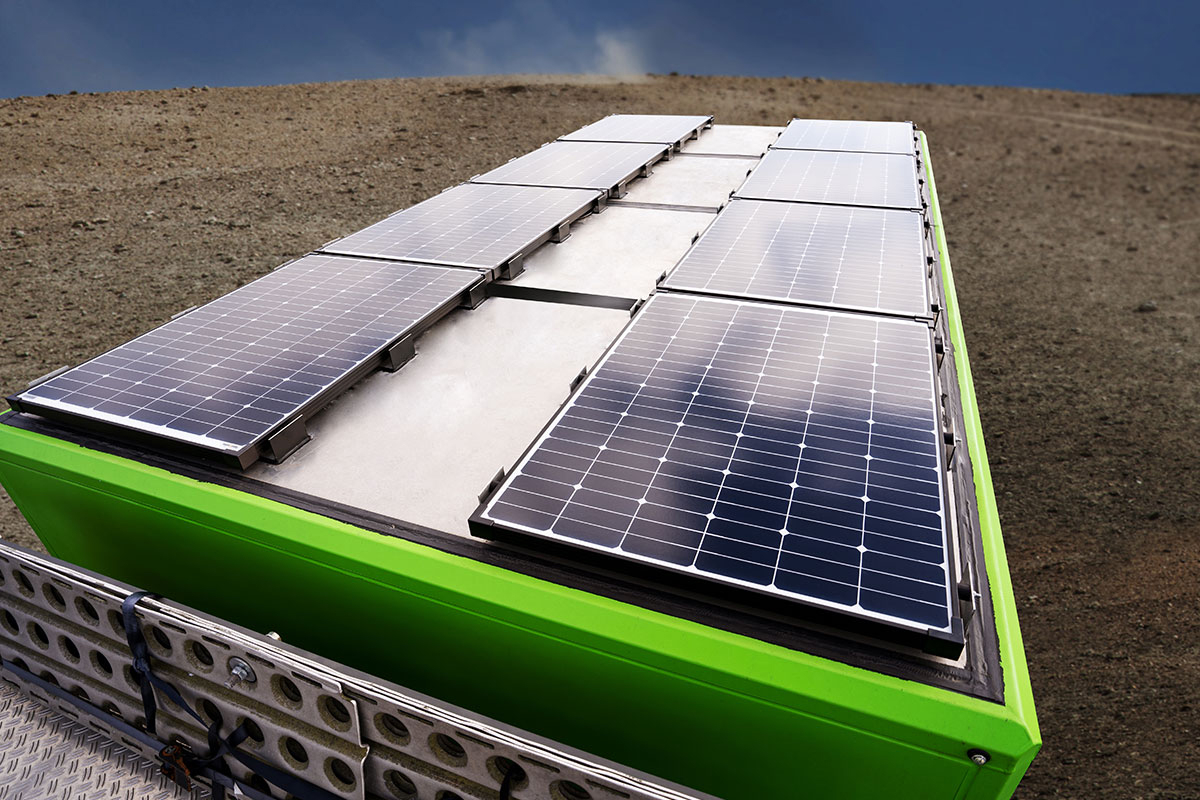
When modules heat up from the standard 25 to 26 degrees, that is no noticeable difference. On a warm summer vacation in the south, however, temperatures on the car roof rarely stay that low. The temperature on the solar modules can easily reach 70 degrees here – and we are looking at a difference of 45 degrees from the reference temperature!
So if a 330 watt solar module with a temperature coefficient of -0.5% heats up from 25 to 70 degrees, we have a loss of 74.25 watts. The module output is then only 255.75 watts.
Improved Temperature Coefficient
High-performance cells with an improved temperature coefficient can reduce the losses caused by heat.
With a module with a temperature coefficient of -0.29%, like our black tiger 100 and 180 Wp modules with a combined 360 Wp (to compare a similar value), the output at the same heating drops not to 279 watts, but only to 313 watts! That makes for a big power gain in your batteries!

black tiger high-performance solar modules are, by the way, available in many special formats for optimal use of roof area – even next to roof windows.
Update:
Not all sizes of black tiger solar modules are available any more. They have been succeeded by the ULTRAblack tiger solar series with the latest cell technology.
Sizing Your Solar System Correctly
What matters is that you optimize your camper’s system for “winter”, i.e. poor sunlight conditions. If you calculate your demand so that it just about works in the best summer weather, the temperature coefficient may spoil your calculation, unless you factored it in from the start.
If, on the other hand, you optimize for poor conditions with short days and a low sun, you won’t have a problem in summer. With better weather you will have enough power anyway, if not too much, and the temperature coefficient can then be (almost) irrelevant to you.
Was this info on the temperature-dependent efficiency of solar panels helpful? Show it to friends in your groups or private messages too:
These topics around the solar system might also interest you: