
A guest post by Busbastler Manuel Lemke
Servus! I’m Manu. DIY converter, Busbastler, and out and about on the internet as Schalldose.
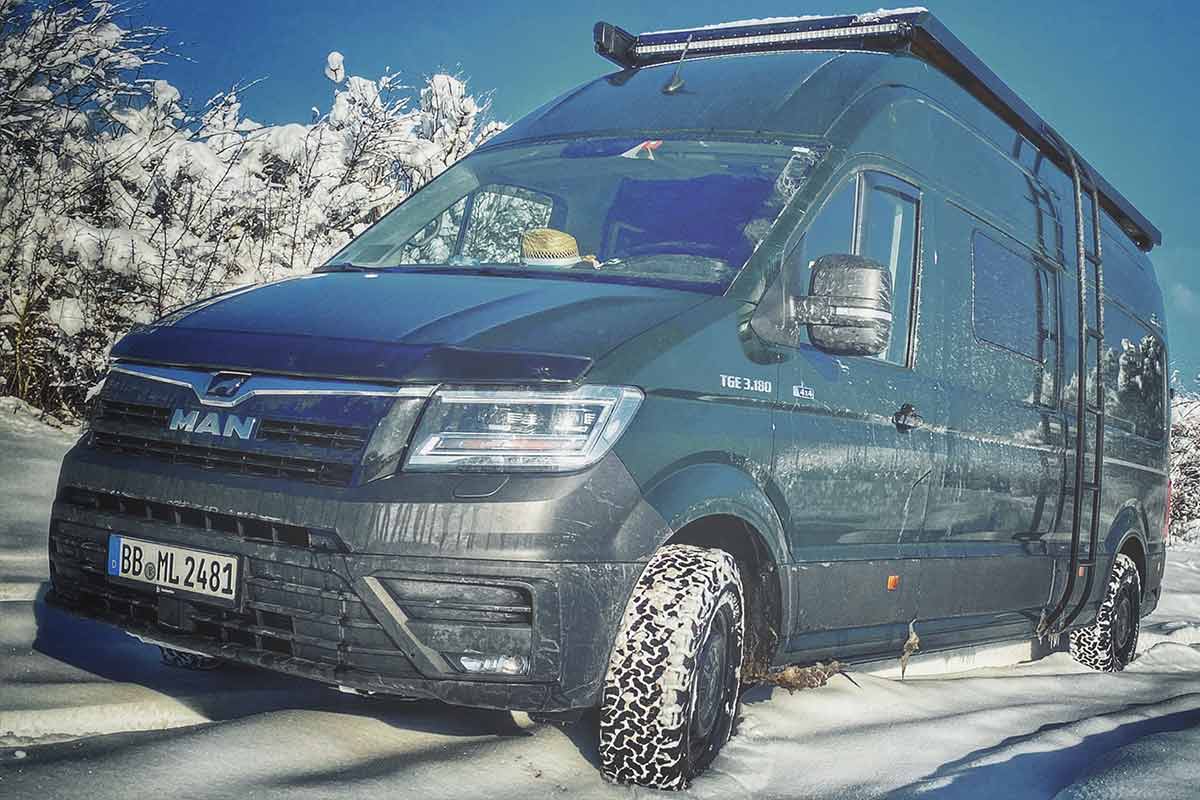
When I got to pick up my MAN TGE 3.180 at the end of 2019, I was facing a whole mountain of open questions and decisions that had to be made.
Heat Before Power
Before tackling the tricky topic of electricity, I decided to install a heater first and gather some initial experience. Well, that’s not quite true. I installed the Twin Kit, so 4kW of heating power in total, which I badly needed at first.
I screwed together a bed frame from an old wooden shelf, threw a mattress on it, and then spent a good week on the road in my completely bare TGE. I was glad to have the 4kW, because the empty sheet-metal box cooled down all the warm air straight away. So next came insulation, and then I thought about the technical side:
Enough Power in the Van Is Super Important to Me
One prerequisite for me was that I can work in my vehicle. That means there has to be enough power available so that laptop, batteries and lights can be supplied with energy at all times. And on top of that, cook electrically?
Gas, Alcohol, Diesel – Possible Alternatives
Weighing effort against benefit, most people probably tend towards a gas solution, and rightly so. For my part, though, I feel anything but comfortable with gas. That’s probably irrational and completely unfounded, but I wanted to try to avoid a large gas installation.
The cartridge stove solution was also quickly out, because for one thing I don’t like how these stoves look, there are hardly any approved for interior use, and my TÜV inspector waved them off from the start. He wouldn’t accept a stove like that for the motorhome registration inspection. Interestingly, he would have been less averse to an alcohol stove, but of course that would also have to be permanently installed for it to be accepted.
Until that conversation, I hadn’t even had alcohol stoves on my radar, but the research quickly showed that there were only a few really good stoves, and that cooking on alcohol also takes a bit more patience than cooking with gas.
Another alternative would have been a diesel cooktop . Advantage: you carry the fuel around anyway, and in winter you heat the vehicle at the same time as cooking. Disadvantage: diesel stoves are very sluggish, you can’t just quickly make a coffee, and in summer you heat the vehicle at the same time as cooking.
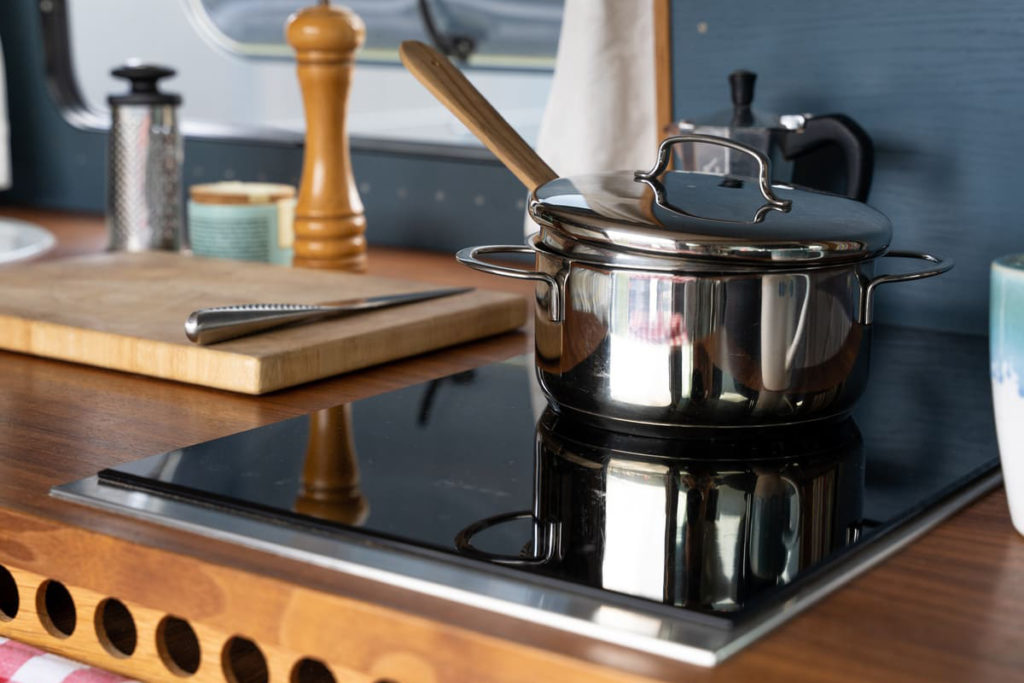
What you keep reading as a “workaround” for a motorhome registration is: “Just build in an induction hob that you then simply carry around with you and can use, for example, on a campsite via shore power”.
Hmmm. Induction. I find it very cool at home, but on the road? Does that work? I remembered the Freiheitsmobile meetup in Luxembourg. There I met a participant with a Crafter who cooked off-grid with induction and obviously had no problems with it. Mind you, in summer. My idea, however, was to be on the road all year round, and whether cooking with electricity would also be possible in winter was hard for me to picture. Especially since electrics are really a hated topic for me.
I’ve already sent countless components to the eternal hunting grounds because I connected something wrong somewhere. So I had to ask someone who knows about it. And that’s how a very intensive contact with Martin came about (see tigerexped: about us), who first took off my rose-colored glasses and threw them far away.
Away With the Rose-Colored Electrics Glasses
That cooking with electricity brings such a long tail of consequences floored me at first. Sizing the batteries, DC-DC chargers and inverter was a rather tricky matter, where we had to look very closely at what is even possible with current components, and under what conditions the setup can make sense.
A big advantage here is that I rarely stay in one place for long. I travel a lot, often long distances, so in winter I get my storage full mainly via the alternator. Still, it also happens that we stay put for 2-3 days, e.g. at one of our Busbastler events. In winter, at least part of the capacity used should come back in via photovoltaics then too.
So it was also quickly clear that the roof had to be completely covered with solar panels. I’ll get to the numbers in a moment. First, though, I had to decide which panels it should be. Most panels available on the market had dimensions so impractical for me that I would always have had to waste a lot of space, or the panels would have had to stick out so far at the sides of the vehicle that I couldn’t do that for looks alone.
900 Wp on the Panel Van
Fortunately, this decision coincided almost exactly with the release of the new black tiger solar modules, and here the tigers hit the bullseye for me 100%. Perfect dimensions, ideal efficiency, and in sleek black on top of that. I was head over heels, and thanks to a specially made roof rack, five panels with a total of 900Wp now fit on my roof. A setup you would usually find in expedition vehicles, but not in a panel van.


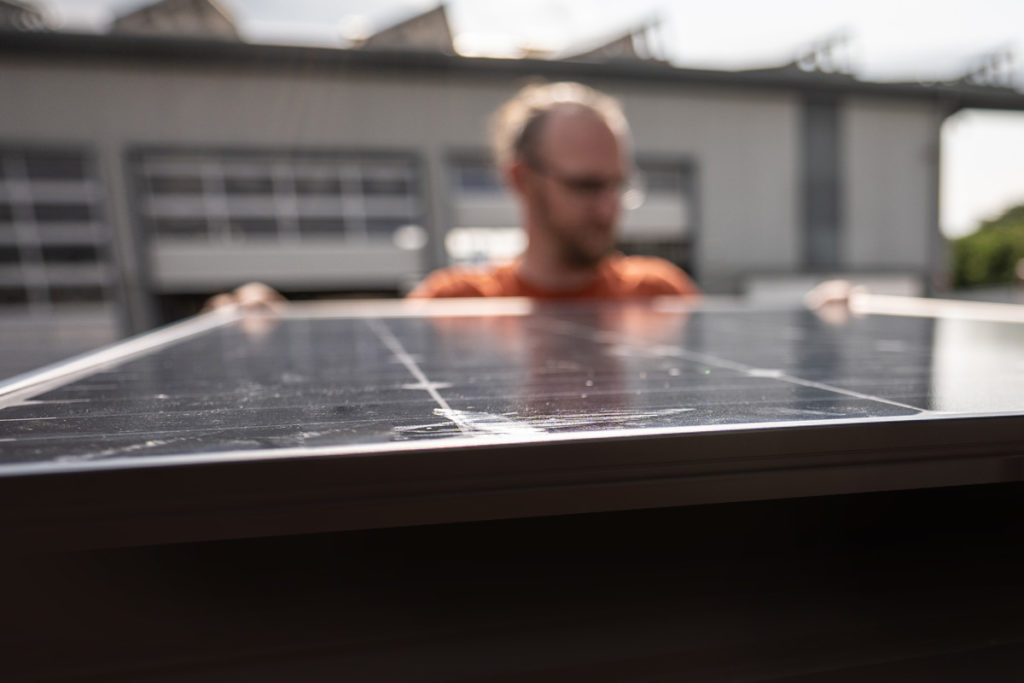
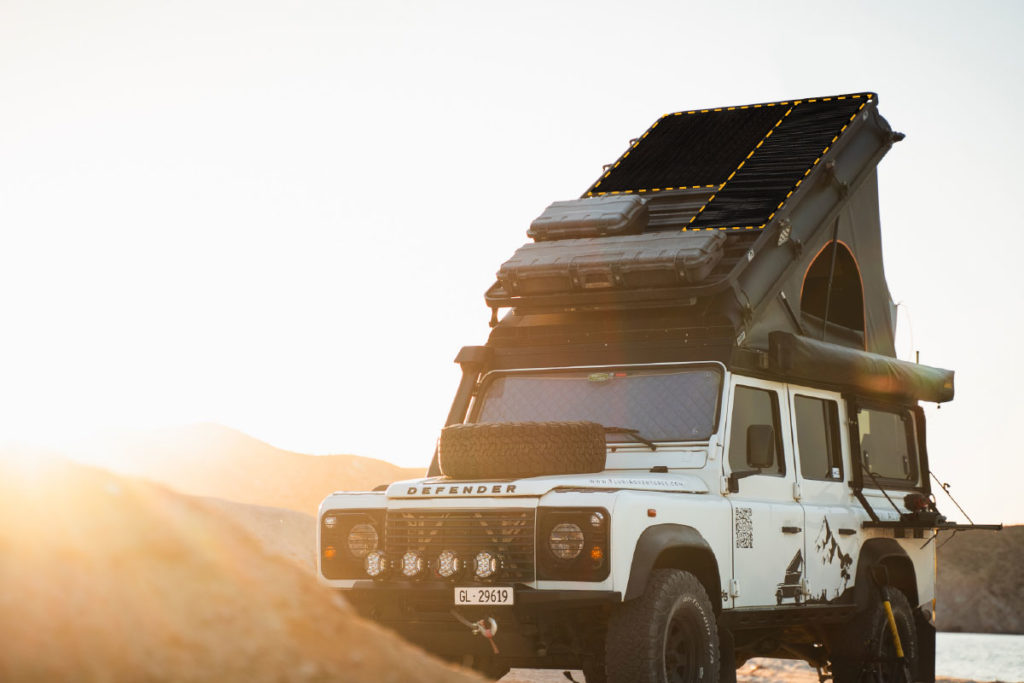
black tiger solar modules are available in various special formats to make perfect use of the space on the camper roof.

The other key data: 480Ah storage, 3000W inverter, everything equipped with Bluetooth as far as possible and controllable and monitorable without conspicuous displays in the living area.
First Experiences
All in all, I’ve now spent a few weeks in winter with this setup and can say: if you keep a bit of an eye on the system, you can get by well with it in winter too.
That it works is mainly down to the good advice and the right choice of components. I was a bit irritated at first that the electrics modules in the shop can’t simply be bought directly, but that’s because it protects people like me from blindly ordering something that might not fit in the end.
NEW: Measured Consumption Values
How much power the hob really uses in everyday travel, Florian Kugler from Anton Reisemobile has measured very precisely for you. He also gives lots of important tips and notes on use, and on what to keep in mind in the power concept for recharging the energy. Read here: Induction hob in a camper / motorhome
My Tip
Use the consulting service if you’re a layperson when it comes to electrics. As an absolute plus and the icing on the cake: the components I ordered came with a matching wiring diagram and installation instructions, so I could follow exactly which component had to be connected to which other component, and how.
Even so, I can only keep urging caution: electricity is dangerous, and if you have no idea, it’s best to bring in a professional for the installation, otherwise things can go badly wrong even with the best planning. Or you take a suitable course on camper electrics where you learn the basics and then know your own system if errors occur.


Conclusion
To finally conclude whether cooking with induction is more of a hobby or the future in campers, I’d say: right now, maybe both. At the moment you still have to swallow quite a few expenses, or spend them, for a proper setup, but ideally it makes you a good deal more independent, especially since our daily lives are increasingly shaped by electronic companions.
A lot is sure to happen here in the future. Better batteries, even more efficient photovoltaic components and more economical consumers will, in my opinion, soon see to it that bulky gas bottles and lines disappear from the modern camper.
Well. And so the guy who doesn’t like electricity now drives around with a pretty potent power plant and is pretty happy about it.

Was this report interesting for you? Show it to like-minded people and friends too. With just one click!
You might also like these articles: