Last updated: September 24, 2025
The best autumn start begins in summer.
Many auxiliary heater problems that suddenly show up in autumn – smoke, aborted starts (error 13), harsh ticking, uneven running – happen because the heater hasn’t run at all for months. In the fine fuel lines (especially in the fuel pump), diesel can gum up and stick after a long standstill. That slows the delivery, disturbs combustion and makes the heater abort its start attempts. In some cases these blockages can no longer be cleared – the pump then has to be replaced.
So here is our most important recommendation right up front:
Don’t let your heater sit idle in summer either. Run it for about 20 minutes every few weeks. That keeps the diesel moving, deposits never get a chance to form – and the autumn start is low-smoke and reliable.
In this compact guide you get answers to more important questions about the diesel auxiliary heater in autumn, plus clear step-by-step instructions.
Smoke & Smell – What Is Normal?
When the heater runs for the first time after a break (or is brand new), brief steam or a “new smell” can occur. In autumn there is more to it: cold, damp outside air and materials (rubber/insulation) that dampen less well in the cold – so the first start seems more “conspicuous”.
Important: A summer break of several months encourages deposits in the combustion chamber, pump and lines. If you regularly run the heater briefly at full load in summer, you will probably see significantly less smoke in autumn.
Sizing Up Smoke Quickly
- Where?
Only outside at the exhaust = usually harmless. Smell inside the vehicle = stop immediately and check for leaks. - How long?
Smoke that clearly decreases after 10–20 minutes can be normal, depending on the condition of the heater and outside conditions. - What color?
Whitish = moisture/condensation,
gray = deposits/part-load operation,
black = lack of air/restriction → check installation/exhaust/intake.
Prevent Instead of Fixing Later (Summer & Transition)
- Summer operation
Even if it’s really too warm for heating: run the heater at full load for 20 minutes every few weeks. That keeps diesel and pump moving and prevents sticking. - Get winter diesel into the system in good time
You’ll find a detailed explanation of this point in the next section.
Error 13 in Autumn – Classifying It Reliably
In autumn, error 13 can be related to the quality of the fuel.
Diesel contains paraffin to improve lubrication. At low temperatures, however, the paraffin flocculates and wax crystals form – similar to candle wax.
That’s why from the beginning of October, filling stations in Central Europe switch to so-called winter diesel. It contains special additives that prevent the paraffin from flocculating and keep the fuel flowable down to about -20 °C.
Typical Autumn Mistake
Error 13 caused by summer diesel typically happens like this: the camper is filled up with winter diesel, but the heater isn’t used again until much later. So summer diesel often remains in the fuel pickup and in the lines to the heater.
With the first night frosts the fuel becomes thicker, and the fuel pump can no longer reliably deliver the flocculated diesel – the heater aborts its start attempts. Error 13 is the result.
That’s why always as a precaution: when temperatures drop, top up with winter-grade diesel in good time to protect the fuel system and engine of your camper, and don’t forget that the auxiliary heater is supplied with diesel too. Right after refueling, let it run at full load for 10–15 minutes (for long lines, 20 minutes is fine too). That way winter diesel also reaches the lines, pump and combustion chamber of the heater.
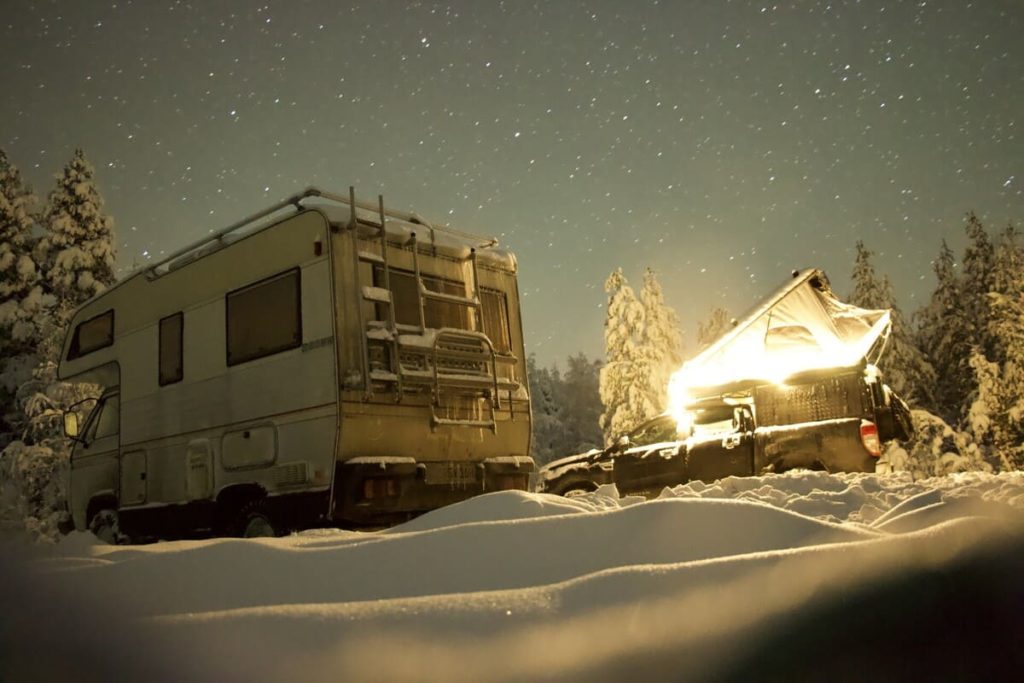
On tour here: tigerexped support tiger Julian and friends
Other Causes of Error 13
Error 13 can also have other causes, because the code itself only means that within the automatic start attempts no start was possible.
To find out what the cause might be, look at the smoke development.
Quick assessment:
- No/hardly any smoke during the start attempt:
No diesel is arriving at all (the most common case in practice). - Heavy white smoke, heater still doesn’t start:
Diesel is there but doesn’t ignite. This is the main indicator of a heavily sooted combustion chamber/flame screen/glow plug. No endless start attempts – fix the cause. Here’s how to check the combustion chamber for soot and clean it.
On first installation error 13 is normal. New air-filled lines almost always cause error 13 at the beginning – after bleeding the heater starts.
How to proceed with error 13 in these cases and how to better understand exactly what the cause is in your case is explained by tiger Martin in a detailed video on the following page:

All the info and a detailed explainer video from tiger Martin.
Fuel Pump: Has the Ticking Suddenly Gotten Louder in Autumn?
Autoterm heaters come as standard with a rubber-mounted extra-quiet pump. If the ticking is noticed more now anyway, it’s usually not the pump itself but structure-borne noise and the installation situation.
Why it stands out right now
- Longer, colder nights: The heater runs more often and longer, so the ticking is more noticeable.
- Cold material dampens worse: Rubber/plastics get harder, decouplings lose damping, thin sheet metal resonates more easily.
- Colder fuel: Slightly thicker diesel can make the hydraulic pulses seem “harder”.
- Quiet in the vehicle: Windows closed, less ambient noise in autumn – resonances in the interior stand out more.
- After the summer break: Brackets may have settled, or cable ties/lines touch the sheet metal somewhere? That could have created new structure-borne noise bridges.
Measures – How to Make It Quieter
- Bleed the lines: After a long break there may be small air bubbles in the lines that can make the ticking sound worse.
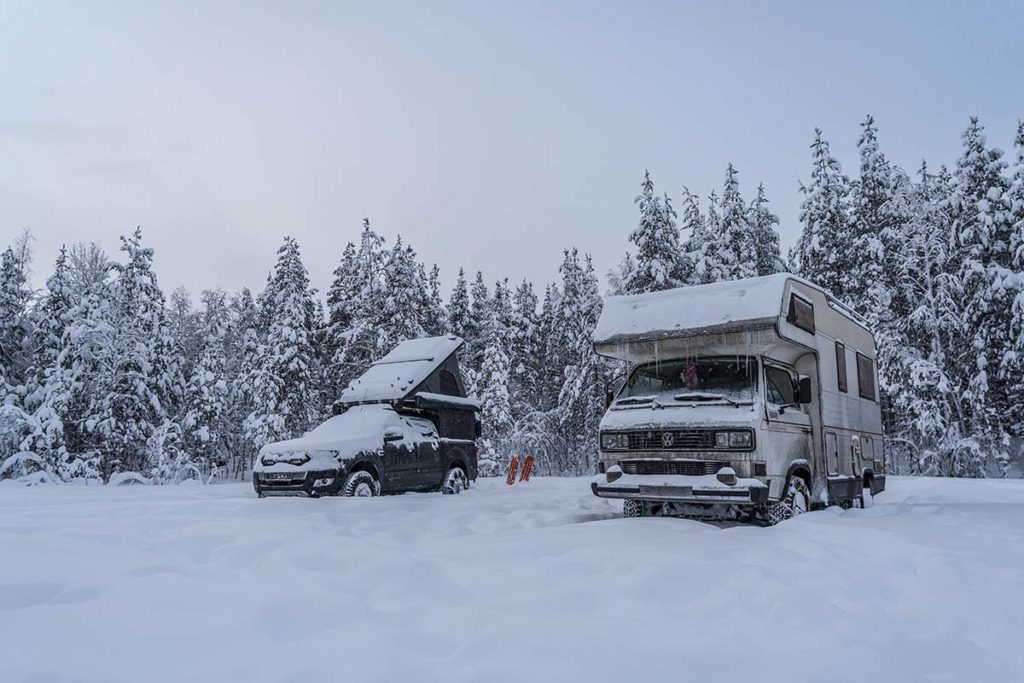
Also read our article about insufficient heating output and a fuel pump that is too loud.
- Check the decoupling: Don’t tighten the pump too firmly in its rubber mount, as that stops the material from doing its job.
- Eliminate structure-borne noise bridges: Around the pump/bracket there should be no contact with sheet metal/furniture; check screws, clamps, cable ties.
- Decouple & relax hoses: Route lines near the pump in gentle curves and with soft clips; avoid contact with sheet metal using fabric/insulation.
- Correct the mounting position: Pump outlet pointing slightly upward, no hard kinks directly at the pump.
- Calm the mounting point: Weigh down thin sheet metal under the bracket with mass (e.g. alubutyl) or an insulation mat.
- Reconsider the location: If possible away from the sleeping area, but accessible and protected.
Is There Enough Power & Diesel for the Night?
The nights get longer and colder – so the heater runs longer in normal operation and the start phase meets colder batteries. Both increase demand slightly.
How Much Power Is Needed (Autoterm Air 2D, 12 V)
- Start: briefly up to 8–10 A for about 2–3 min.
- Heat-up phase: approx. 2–3 A.
- Normal operation: typically 10–20 W (≈ 0.83–1.67 A); depending on the level, 0.83–2.42 A is realistic.
- Example calculation: (see, among others, our magazine article Installing / Retrofitting a Diesel Auxiliary Heater in a Camper & Motorhome – Everything You Need to Know
So you need roughly 10.5 Ah for an 8-hour night (including start).
For 10 hours you’re at roughly 12–16 Ah on a low level – more at a higher level.
Tips on Power Consumption in Autumn
Batteries and cold are not friends. With these tips, though, you can effectively soften the effects of the cold.
Tip 1:
Lead-acid batteries effectively have less usable capacity in the cold, so recharge earlier in autumn and winter. LiFePO4 is less critical in terms of usable capacity.
With LiFePO4 batteries, though, keep in mind that they can no longer be charged once they have gotten too cold. That’s why our tigerexped LiFePO4 batteries sit on an integrated heating mat. Read our article LiFePo4 Batteries with Heating – What to Note for Winter Use if you want to learn more about using self-heating LiFePO4 batteries
Tip 2:
In very cold conditions, switch the heater on while driving – that relieves the battery in the start phase.
Tip 3:
Rather let the heater run continuously than switching it on and off. That way you save the energy-intensive start phase. It’s also more energy-efficient to keep a room at a comfortable temperature than to heat it up again and again whenever it gets too cold.
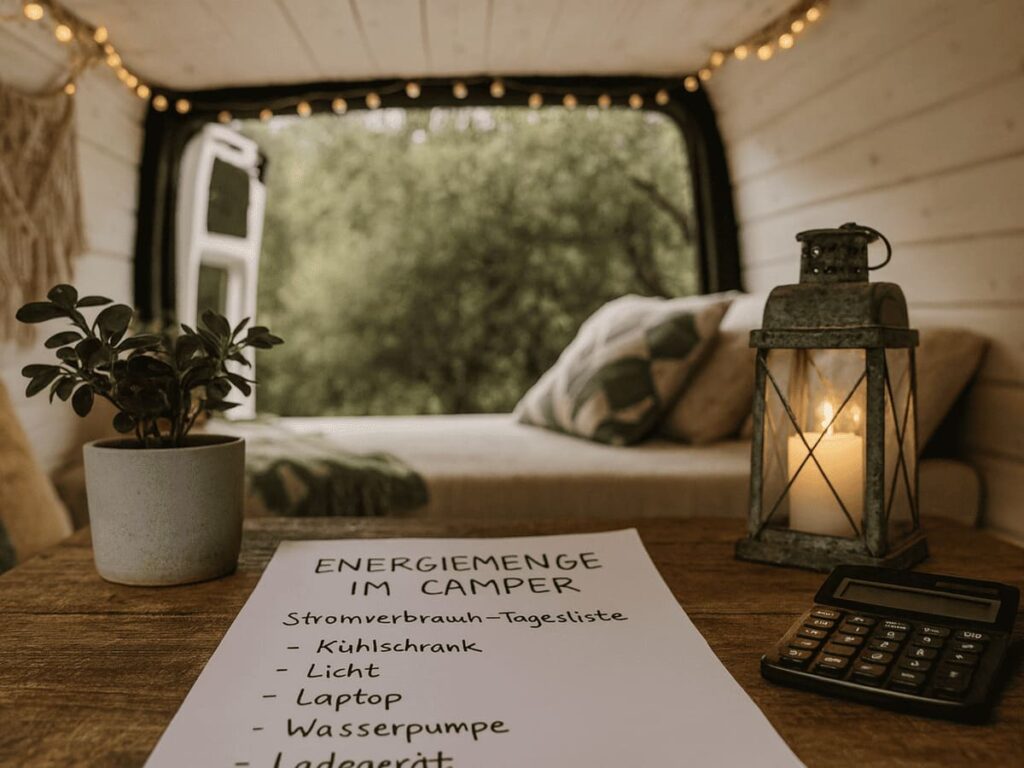
How much power do you need on the road overall? Read this article to calculate it:
We’re happy to help you with putting together your electrical system:
How Much Diesel Is Needed
Diesel consumption is usually less critical than battery capacity, since the heater is normally fed from the camper’s large fuel tank. Still, of course, you should keep an eye on it, because the heater will shut off (due to the shorter fuel pickup) while the tank is still far from empty – and that’s a good thing. A heater shutting off is one thing – not being able to start the vehicle to refuel is another.
In normal operation the Air 2D uses about 0.1–0.25 l/h (medium heat output).
For 10 hours that comes to around 1.0–2.5 l. On clear, cold autumn nights you’ll be closer to the upper end if the interior is large/uninsulated.
Burning Off – Why, When, How
Why right now? With the transitional temperatures in autumn, the heater often runs for hours on a low level. This part load encourages deposits in the combustion chamber. Cold, damp outside air and lots of short starts intensify the effect.
A deliberate full-load run (“burning off”) protects the combustion chamber from sooting, stabilizes combustion and reduces smoke at start.
When burning off generally makes sense:
- Start of the season: After the summer break, once for 30–60 minutes at full load.
- After staying at high altitude: Autoterm heaters have an integrated altitude kit. Still, after returning to moderate altitude the heater should be given one chance to get rid of soot deposits.
- Regularly in use: If you’ve heated mostly on a low level for several nights, at the latest every 14 days.
Tip: Do you use the Comfort Control control panel? Great, it has an automatic burn-off reminder and tells you regularly.

You don’t have a Comfort Control yet and would like to compare whether an upgrade would be worthwhile?
Here we have a comparison of the options and features of the available control panels for Autoterm auxiliary heaters.
Avoiding Condensation in Campers and Motorhomes
In autumn/winter, warm, humid indoor air meets cold surfaces (windows, sheet metal, backs of furniture) – that’s where moisture from the air settles. Camper and motorhome owners should keep a deliberate eye on this when using their vehicle in cold temperatures – in the long run, mold is not far off under these conditions.
Here’s how you can counteract it:
- Burst ventilation instead of tilted windows: Several times a day, open wide for a short time (ideally with cross-ventilation). Especially in the morning after sleeping and after cooking or showering. Warm heater air plus brief cross-ventilation exchange the humid air quickly.
- Direct the heated air: Deliberately guide warm air to cold surfaces and in between: exactly, ventilate briefly. That lowers the relative humidity and dries surfaces in problem areas.
- Ventilate under the mattress: Use 3D spacer mesh/slatted frames under beds, leave the sides open; for storage beds plan ventilation openings (with grilles).
- Air paths in furniture building: Leave a gap to the outer wall behind cabinets, and provide holes and slots for good circulation.
- Minimize moisture sources: Store wet clothes and shoes in the shower area, if you have one. Use lids when cooking; wipe wet surfaces instead of heating them dry.
- Insulate windows/surfaces: Use custom-fit interior thermal mats on windows without blocking air circulation.
- Use a hygrometer: A small hygrometer helps with assessment; 40–60 % RH is a good target range. If humidity rises noticeably: burst-ventilate briefly.
On tour here: tigerexped technician Nico

Auxiliary heater for your camper
Practical complete kits with everything you need and for every requirement from summer van life to winter in Canada.
Did these answers to the most common auxiliary heater questions in autumn help you? Then feel free to share them with friends and like-minded people who could benefit as well:
More interesting reads on auxiliary heaters in campers: