

Why use the roof area either for storage space or solar energy when both are possible at the same time?
That’s exactly what Alex from Fichtel-Van thought.
With our narrow special-format solar modules, he turned his roof boxes not only into practical storage space, but also into an efficient energy source. A super smart idea that we of course want to present to you.
The Challenge: Making the Best Use of Space on the Camper Roof
The roof of a camper van offers only limited space – and it quickly runs out. Especially if you want to be self-sufficient on the road with a solar system, but also want to fit roof boxes, roof tents or other add-ons, you need clever solutions.
Water sports enthusiasts and other travelers with bulky equipment can probably tell you a thing or two about this.
The Solution: Roof Boxes with Solar Module Lids
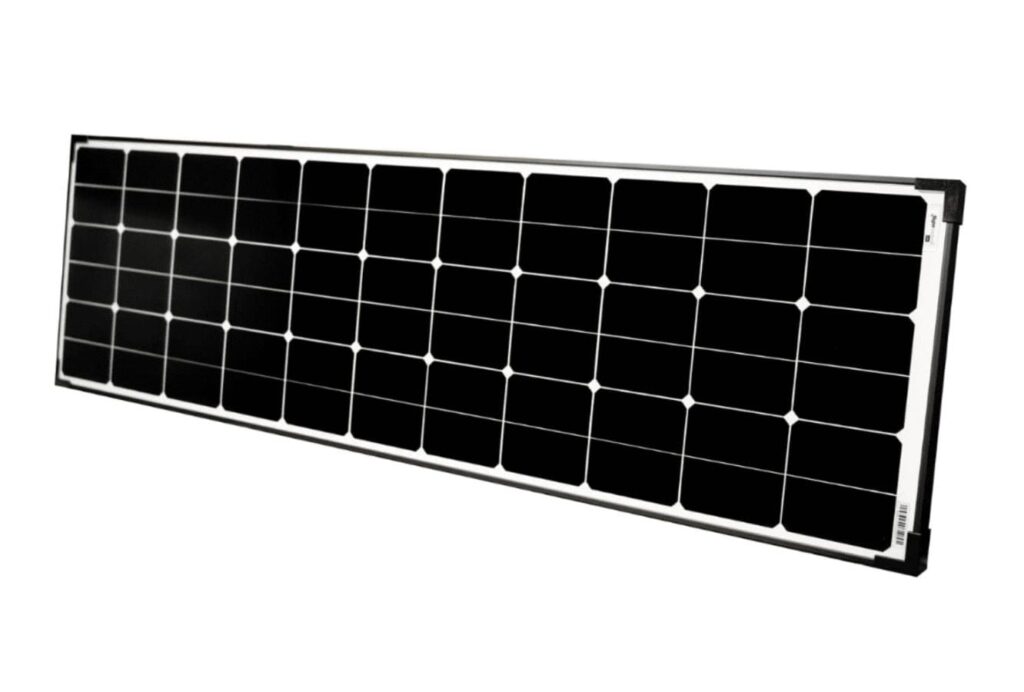
Why not combine solar modules and roof boxes? Alex discovered the super narrow black tiger solar modules with 120 Wp output (which, in a test by the magazine Promobil, were by the way named a Buy Recommendation) for this – the perfect solution!
UPDATE, new product line: ULTRAblack tiger with 120 Wp output has replaced the original black tiger modules with 120 Wp – even more output on the same area in an uncompromisingly black design.
Our space-saving modules were developed specifically to make optimal use of the roof area and, at just 42 cm wide, fit perfectly next to roof hatches or ventilation mushrooms.

Alex’s somewhat different use of these modules offers advantages especially to travelers who carry recovery gear, sports equipment or other bulky equipment. Large-volume roof boxes are ideal for them – and can be combined with the wish for solar power.
The boxes on Alex’s van are especially roomy, and thanks to the wide central aisle that remains, everything inside is easy to reach.
In theory, one side of the solar lids can even be propped up toward the sun, increasing the solar yield.


Adapting the Idea to Your Vehicle
Of course the implementation has to be technically sound so that no problems arise afterwards. Compared with installing a normal solar system, there are a few more points to consider.
- Suitable box: The surface of the roof box must be suitable as a stable, precisely fitting support surface for the solar module.
- Cable routing: The cables should be routed thoughtfully and protected to avoid damage from movement or pinching.
- Module reinforcement: Keep in mind that the solar module is only 42 cm wide but 144 cm long, and it must not twist when the box is opened and closed – otherwise the cells could be damaged.
- Securing the load: Secure items in the box so that no heavy object hits the solar module from below when driving over potholes.
Need Support?
Fichtel-Van offers a perfect solution for that: the company gives you the opportunity to work on the conversion of your camper yourself. You bring your ideas and do as much as possible yourself, and a whole team of master carpenters, engineers and interior designers helps you when you need support.
Take a look at their pages:
More Tips on Solar Systems in Campers
You can also find important information on sizing and choosing a solar system for your camper in these articles:
- Average Solar Yield – What Your Module Really Delivers
- Temperature Coefficient – Be Sure to Consider It When Calculating Your Solar System!
- How Much Solar for a Camper and Motorhome – Assessing the Influencing Factors Correctly
- Installing a Motorhome Solar System – Step-by-Step Guide
Everything for Your Solar System
black tiger solar modules, everything else you need to complete and install your solar system, and handy complete kits including installation plans are available here:
Did you like this tip on combining a roof box and a solar module? Then feel free to share it with other camper enthusiasts:
More topics in the tigerexped Magazine:


